
ACL Tear & Injury Treatment in Singapore
Content
- What is an ACL?
- Grades of ACL Injuries
- Symptoms of an ACL Injury
- Causes of an ACL Injury
- What are the Non-Surgical Treatments?
- What are the Surgical Treatment for ACL Injury?
- Dos and Don’ts Post-Treatment
- Diagnosing an ACL Injury
- Why You Shouldn’t Ignore an ACL Injury
- Preventing ACL Injuries
- Orthopaedic Doctor for ACL Injury
Book An Appointment
Key Takeaways
- The anterior cruciate ligament is one of four important ligaments connecting the thigh bone to the shin bone
- A common symptom is the sensation of sometimes audible, ‘popping’ or cracking in the affected joint when you’re injured
- You may or may not feel any pain when you suffer an ACL injury, so it’s important to get yourself checked as soon as possible
- A low-grade ACL injury can be managed without surgery, but severe injuries like a torn ACL require reconstruction surgery to properly treat the resultant knee instability.

What is an ACL?
The anterior cruciate (pronounced “KROO-she-ate”) ligament, or ACL, is one of four key ligaments that connects your thigh bone (the femur) to the shin bone (the tibia). It forms an “X” shape with your posterior cruciate ligament (PCL), with the ACL closer to the front and the PCL closer to the back. The ACL ensures that your knee doesn’t bend or rotate too much and stabilizes your knee joint, thereby preventing excessive or unnatural movement beyond its natural limit.
Grades of ACL Injuries
There are three grades of ACL injuries, which indicate how severe the injury is:
- Grade One: The ACL is damaged (e.g., mildly stretched) but is not torn and is still holding your knee bones in place; it may still cause some discomfort or pain
- Grade Two: The ACL is partially torn and/or loosened, and may cause some (or a lot of) pain and more commonly instability; some symptoms are more apparent or severe
- Grade Three: The ACL is completely torn and not in continuity; Surgical treatment is urgently required
You should avoid self-diagnosing as only a thorough diagnosis by an orthopaedic surgeon can determine the exact grade of the ACL injury and thus inform the nature of your treatment.
What are the Symptoms of an ACL Injury?
When an ACL injury occurs, some symptoms almost immediately become apparent. The most common symptoms you’ll experience include:
- Feeling or hearing a “pop” in the knee
- Swelling of the knee within a few hours
- Variable amount of pain, especially when putting weight on the affected knee (moving, walking, etc.)
- Difficulties in moving or putting weight on the knee
- Pain when moving the affected area
- Feeling as if your knee has given out
What are the Causes of an ACL Injury?
ACL injuries frequently occur during sports activities or from a workplace injury where you make sudden movements or changes in direction, the strain of which can cause a tear on the ACL. This is usually characterized by the “popping” sensation you might feel (or even hear) when an ACL injury occurs.
Common causes include:
- Suddenly slowing down, then changing direction or stopping
- Pivoting your leg while your foot is firmly planted
- Awkward landings from a jump or stumble
- Tackles or collisions that hit the knee
The pain you experience can vary, with some people reporting intense pain while others only experience mild pain. However, the severity of the injury is not determined by the pain you may experience. You should quickly see a knee pain doctor when an injury does occur.
Elderly persons are also at significant risk of sustaining an ACL injury, with risk factors stemming from weaker musculoskeletal strength to frailty and chronic health conditions. Even a fall from a short distance can potentially cause an ACL tear in a senior adult, which also exacerbates the risk of complications in the future.
Even adolescents can be at risk of an ACL injury. Unlike adults, children’s bodies are still growing. Children have growth plates (physis) at the end of their bones, which allows the bones to grow as the children age. If these growth plates are damaged, either due to an ACL injury or caused by something else, this can cause a growth abnormality such as unequal leg lengths.
What are the Non-Surgical Treatment for ACL Injuries?
For low-grade ACL injuries, prompt first aid attention can go a long way in reducing knee pain and swelling after an injury occurs. Consider following the RICE method:
- Rest: Avoid any activities that put pressure/stress on the affected knee. Let your knee heal on its own.
- Ice: Place a cold compress or ice packs to the affected knee for 15 minutes several times a day.
- Compression: Wrap the affected knee with elastic bandages or a compression wrap to reduce swelling.
- Elevation: Position your knee and leg above the level of your heart for as often as possible. You can prop up your knee with pillows.
Physiotherapy will also be needed to help reduce pain and swelling, strengthen your muscles, and steadily restore the knee’s range of motion. Your physiotherapist will show you various exercise methods to help with this, many of which centre around core, hips and leg strengthening.
You’ll also be instructed on how to use a brace to stabilize the knee, or crutches so you can move around without putting weight on the affected knee. Several physiotherapy sessions will be needed before the ACL makes a recovery and is highly recommended for all types of ACL injuries, either before or after surgery.
You may be prescribed nonsteroidal anti-inflammatory drugs (NSAIDs) and anti-inflammatory medicine to help manage pain and inflammation of the knee. Once the pain and inflammation have subsided, you’ll no longer need these.
What are the Surgical Treatment for ACL Injuries?
ACL Reconstructive Surgery
For a torn ACL, reconstructive surgery is the only way to repair it. It may also be needed if there is other damage to other important knee structures. During surgery, the torn ligament will be replaced with a segment of tendon, a tissue that’s like a ligament but connects your muscles to your bones. This segment may be taken from another part of your knee (an autograft), a deceased donor (an allograft), or even an artificial graft. After surgery, further physiotherapy will be needed to help restore the knee’s stability and movement.
This method takes a third of your patellar tendon (which connects the kneecap to your shin bone, or tibia) from your injured knee. A small piece of bone is harvested from the patella and the tibia to form a bone-tendon-bone graft, then inserted into the knee by carefully drilling a tunnel through the tibia and femur and placed where the damaged ACL used to be. After some time, new tissue will grow along the graft as it fuses with the bone of both the femur and tibia.
This method makes use of two of your hamstring tendons, which connect your hamstring muscles to the back of the thigh. These two hamstrings are then “bundled” together to form a tissue graft. The graft is then inserted to where the damaged ACL was in a similar manner as the patellar tendon autograft. The advantage this method has is its relatively less invasive manner of acquiring the graft compared to the patellar tendon autograft.
Allografts are taken from deceased donors to replace the damaged ACL. Though it isn’t as strong compared to the other two methods, it does have the advantage of reducing invasive surgical methods to acquire the graft, reducing the duration of the surgical process, and decreasing post-operative pain.
Each method does have its share of pros and cons, so be sure to consult your doctor on your available options.
Dos and Don’ts Post-Treatment
Making a full recovery might take a few months or until your orthopaedic doctor says so. Even after your doctor gives you the green light, don’t immediately jump back into strenuous physical activity. You should ideally get back to it slowly at your own pace. After all, each person goes through very different recovery phases, so you shouldn’t compare yours with someone else’s.
If you’ve been undergoing physiotherapy, your physiotherapist will give you a detailed plan on how you can gradually resume physical activity at your usual pace. Stick closely to the plan and observe how your knee is coping; if you still experience some degree of discomfort, inform your physiotherapist as soon as you can. Further adjustments can help a lot with your eventual return to form.
Here are some other helpful tips to get you back into shape:
- Keep your knee completely straight to let the joint heal properly
- Avoid putting weight on the recovering knee until the doctor says you can
- Keep doing all your physiotherapy exercises
- Keep wearing the brace until your doctor says you no longer need it
- Don’t miss your scheduled appointments with your doctor/physiotherapist
As long as you listen to your doctor’s advice, you’ll make a speedy recovery in no time.
How Knee Pain Doctor would Diagnose an ACL Injury?
Physical Examination
Diagnosing an ACL injury will require a meticulous physical examination to determine the grade of the injury. Ideally, you should come in for a check-up as soon as you can to hasten the recovery process. We may ask if you heard or experienced a “popping” sensation when the injury occurred, examine the extent of swelling on your knee (see picture below), and determine how limited your range of motion may be. You may experience discomfort or pain during the examination, so be sure to tell your doctor if any movement hurts or worsens symptoms.

Some manual tests that may be done include:
- The Lachman test: You’ll be lying flat on your back as your doctor carefully bends your knee to a 20-degree angle. From there, they’ll gently but firmly pull your lower leg forwards. Based on their observations, your doctor will be able to tell the severity of the ACL’s injury
- The pivot shift test: You’ll lie on your back as the doctor lifts your leg and puts rotational pressure on the knee. If the bones don’t shift, your ACL is not damaged
- The anterior drawer test: You’ll lie on your back with your knee bent and your foot resting on the exam table. The doctor will apply gentle pressure behind your knee to try and move the lower leg slightly forward. If your lower leg moves further away from your upper leg, then the ACL is injured

Other Diagnostic Tests
The physical examination is usually enough, but in some cases, additional tests may be ordered to see confirm the diagnosis, examine the extent of damage to the ACL, and look for other complications.
An X-ray, for example, may be used to look for possible fractures in other places of the knee. Meanwhile, a magnetic resonance imaging (MRI) test may help determine the exact extent of an ACL injury as well as any other damage to other parts of the knee.
Why You Shouldn’t Ignore an ACL Injury
An ACL injury causes a great deal of pain and discomfort that makes it difficult, even impossible, to perform activities of daily living (ADLs) on a normal basis. Putting additional stress on the injured ACL can worsen things and potentially cause further knee damage that may be much harder to treat.
You can live with a low-grade ACL tear, but it will still interfere your ability to move around or perform specific ADLs. You’ll still experience some instability when standing or moving around, making it hard for you to enjoy morning walks or shopping with your family. Moreover, you’re still at risk of developing other knee-related injuries in the future.
Additionally, a torn ACL cannot heal on its own. Surgery is the only way to repair a damaged ACL. It’s therefore crucial that you seek medical assistance immediately after you’re injured. In fact, ACL reconstructive surgery helps reduce the risk of developing osteoarthritis. Delaying medical attention can make a huge difference in your overall quality of life and not for the better.
How to Prevent ACL Injuries

Whether you’re physically active in sports or otherwise, preventing an ACL injury can be tricky. However, you can still adopt the following steps to help reduce your risk of getting one.
- Wear appropriate protective equipment, such as knee pads
- Double check your equipment as often as possible; if it’s faulty, make sure to replace it as soon as possible
- Exercise as often as you can; strengthening exercises taught to you by your physiotherapist will be relevant for a very long time
- Use proper techniques when running or jumping to prevent excessive strain on your legs
- Warm up and stretch before any physical activity
- Take time to rest in between strenuous exercise or sports sessions
- Don’t overdo it; if you feel any pain during or after physical activity, it’s time to stop
- Declutter your house or training area from obstacles you might trip on/over
- Avoid awkward postures or positions, especially if they affect your balance or footing
- Avoid falls; strengthening exercises can help mitigate this risk
Orthopaedic Doctor and Surgeon for ACL Injury
Dr. Ramesh Subramaniam
MBBS (NUS, SG) | MRCS (Edinburgh, UK) | M Med (Ortho) (NUS, SG) | FRCS (Ortho) (Edinburgh, UK)
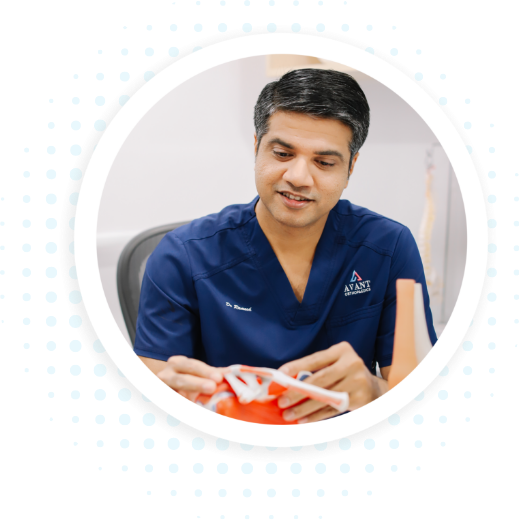
Dr Ramesh, a fellowship-trained orthopaedic surgeon, focuses on shoulder, knee, and arthroscopic sports surgery.
Dr Ramesh obtained his MBBS and Master’s in Orthopaedic Surgery from the National University of Singapore and completed Advanced Surgical Training. He earned his Fellowship from the Royal College of Surgeons of Edinburgh in Trauma and Orthopaedics. He was awarded the HMDP scholarship for a clinical fellowship in Shoulder and Knee Surgery in Dublin, followed by the Tan Tock Seng Scholarship for a Sports Fellowship in Knee Surgery in Barcelona. He also completed a Shoulder Surgery Fellowship at Hospital Del Mar and was trained in arthroscopic joint reconstruction and joint replacement surgeries.
Are You or a Loved One Suffering from an ACL Injury?
Whether it’s a minor discomfort or a sudden, pressing issue, we at Avant Orthopaedics can help identify the cause of the pain and determine the most suitable course of treatment.
Frequently Asked Questions
Yes, they can. There are some instances where an injury to the ACL also causes a related injury to one of the other ligaments. ACL tears happen to be the most common one of the four.
No, there aren’t any differences. The most important thing is to ensure that the surgery goes smoothly and that the graft is not rejected by your body. Your doctor will monitor your recovery progress from time to time to make sure everything is fine.
It has long been understood that ACL tears don’t heal on their own. However, recent research has noted that ACL tears have scarred down over time in some patients via a new rehabilitative method involving bracing, but further studies are still needed to ascertain other aspects that go into the ACL’s healing process without surgery.
Related Treatments and Conditions

Low-grade injuries can heal slowly over time, but if the MCL is torn, surgery is needed to restore its functions. You can still live with a low-grade MCL injury, but you must avoid strenuous physical activities that put pressure on the healing MCL
Find Us Here
Novena
9 AM to 1 PM (Saturday)
Closed on Sundays and Public Holidays
Parkway
9 AM to 1 PM (Saturday)
Closed on Sundays and Public Holidays

