
Ankle Ligament Reconstruction
Book An Appointment

Key Takeaways
- Ankle ligament reconstruction is a surgical procedure used to repair tears or damage to the ankle ligaments caused by ankle sprains or instability.
- Ankle ligament reconstruction is recommended for ankle sprains or complications that do not improve with nonsurgical treatment.
- The surgery may either repair torn ligaments by stitching them together (for mild cases) or reconstruct them by trimming damaged portions and anchoring them to the ankle bone.
- Recovery from ankle ligament reconstruction may take at least six months to complete, though you may return to light activities within a few weeks after surgery.
What is Ankle Ligament Reconstruction?
Ankle ligament reconstruction is a surgical procedure designed to treat torn or damaged ligaments caused by ankle sprains and associated instability. It focuses on repairing or reconstructing damaged ankle ligaments, which are essential for maintaining the ankle joint’s stability. This procedure is also known as the Brostrom procedure.
Repeated ankle sprains or deformities can lead to a gradual weakening of the ankle ligaments, thereby increasing the risk of instability and other complications. If nonsurgical treatments are unable to relieve your symptoms or if your ankle has significant instability, your doctor may recommend ankle ligament reconstruction.
When is Ankle Ligament Reconstruction Needed?
Ankle ligament reconstruction is typically performed in situations where nonsurgical treatments, such as physiotherapy, are unable to resolve your ankle pain and instability. In most cases, the ankle ligaments may gradually feel loose or stretched, leading to chronic ankle instability. The condition is characterised by chronic pain and frequent ankle sprains, which a weakened ankle can exacerbate as you move around. Multiple ankle sprains can lead to persistent discomfort that affects your mobility and ankle flexibility.
Athletes and individuals with active lifestyles may require ankle ligament reconstruction to repair tears that occur during regular exercise or sports. Individuals with foot or ankle deformities may also require ankle ligament reconstruction to manage instability, along with additional corrective treatments if needed.
Conditions that may require ankle ligament reconstruction may include:
- Ligament injuries following trauma
- High arch feet
- Flat feet
- Varus/valgus ankle (abnormal rotation of the foot, either in the direction of or against the other foot)
- Talolisthesis (abnormal position of the ankle bone)
- Additional complications due to other medical conditions
How is Ankle Ligament Reconstruction Performed?
Before surgery, a detailed physical consultation will first take place, where a doctor will assess your ankle’s condition to evaluate a suitable treatment plan. Imaging tests are also performed to allow the doctor to view the ankle and surrounding structures. You may also be provided with additional information and guidance to help you prepare for your surgery. Part of the preparation may include pre-surgery exercises to help strengthen your ankle and promote its recovery after surgery, though this will depend on your condition.
On the day of your surgery, you will be administered anaesthesia to put you to sleep throughout the procedure’s duration. Once you are sedated, the surgeon will first make small incisions around the ankle to perform arthroscopic surgery. They will insert a medical instrument called an arthroscope, equipped with a light and a camera, through the incision. The arthroscope will capture video and transmit it to a monitor that the surgeon uses to examine your ankle joint and the surrounding structures. Additional surgical instruments are also inserted to perform the necessary reconstruction procedures.
The surgeon may first detach the ligaments from their natural attachment points. For mild tears, a ligament may only need sutures to reattach it. For moderate to severe tears, ligament reconstruction will first involve attaching anchors to the bone with sutures, while the surgeon shortens the affected ligaments to remove damaged portions. The initially attached anchors and sutures will then be used to reattach the ligaments to the bone. The surgeon may suture additional tissue over the reconstructed ligaments to help strengthen them.
An alternative treatment method involves harvesting a tendon (typically the hamstring tendon) from your body or a deceased donor and using it to replace a torn or damaged ligament. The tendon will also be held in place using anchors and sutures.
If necessary, the surgeon may perform additional corrective treatments, such as removing bone spurs or fragments that could impinge on nerves or other structures. They will then perform a final check to ensure your ligament has been adequately repaired or reconstructed before closing the incisions. When you wake up, you may need to remain in the ward for a few days for observation.
Recovery from Ankle Ligament Reconstruction Surgery
Your overall recovery from surgery may take at least 6 months. However, you may be able to return to simple activities in 4 to 6 weeks post-surgery, provided your doctor believes your recovery is progressing well.
After the surgery, you may need to use a splint to immobilise and support your ankle, facilitating its gradual recovery for the first few days or weeks. You may experience some pain and discomfort, which can be managed with pain medication and by keeping weight off your ankle for several weeks or months. This pain and discomfort should naturally subside over time. However, if it persists, please notify your doctor immediately. Your doctor will also provide additional advice and support throughout your recovery to minimise complications and promptly address any issues that might arise.
You may need to use crutches or other mobility aids to help you get around and minimise pressure on your ankle for several weeks to months. After your surgery, your doctor will normally schedule your first follow-up appointment within 1 to 2 weeks. During this visit, the surgical stitches or staples will be removed, and then the splint will be replaced with a boot or cast. A few weeks after your initial appointment, you will transition from the surgical boot or cast to a medical brace or other supportive footwear for the next few months.
You should be able to start physical therapy three weeks after surgery, depending on your recovery’s progress. Your physiotherapist will develop a step-by-step plan to gradually improve your ankle’s strength and flexibility, starting with gentle exercises and progressing incrementally as your ankle’s condition improves.
Possible Risks and Complications of Ankle Ligament Reconstruction
Like many surgical procedures, ankle ligament reconstruction carries some risks and potential complications. Your doctor will explain the possible risks of surgery before your procedure to help you understand what to expect and allow you to ask questions to clear up any doubts or concerns you may have.
Potential risks and complications include:
- Infection
- Bleeding
- Blood clotting
- Stiffness
- Nerve damage
- Poor recovery after surgery
Frequently Asked Questions
What exactly is ankle instability?
Ankle instability feels like your ankle will give way when you move, even with minimal activity. This occurs when the ligaments gradually tear and fail to heal correctly, affecting their overall durability and flexibility. In such cases, ankle ligament reconstruction may help alleviate this instability to stabilise your ankle.
Do the sutures and anchors need to be removed after ankle ligament reconstruction?
For most surgeries, these sutures and anchors will permanently remain in your ankle and will become a part of the ankle’s structures. The surgeon may use bioabsorbable implants that will dissolve naturally over time, or non-bioabsorbable implants that remain a permanent fixture in the bone.
How soon can I drive after ankle ligament reconstruction?
You may need to wait until your doctor advises when it is safe to resume driving. Your doctor will ensure your ankle is stable and healthy enough to use without pain, discomfort, or other complications.
Our Orthopaedic Doctor & Surgeon
Dr. McGraw
M.B.Ch.B. | M.R.C.S. (Lon) | F.R.C.S. (Tr & Orth)
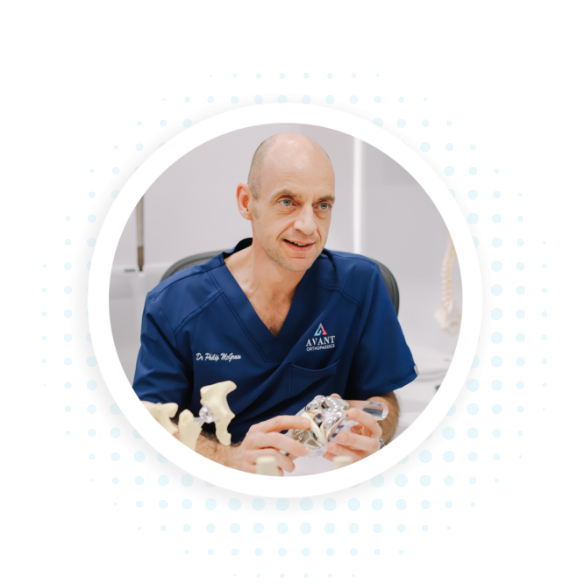
Dr. McGraw is a practising orthopaedic and trauma surgeon at Mount Elizabeth Novena Hospital and Parkway East Hospital.
His special interests and expertise include the management of all aspects of hip and knee conditions, in addition to general orthopaedic and trauma surgery.
Born and bred a Yorkshireman, Dr. McGraw studied Dental Surgery at Newcastle-Upon-Tyne in the United Kingdom. Upon qualifying, he worked as a Maxillofacial surgical trainee before undertaking his dental fellowship at The Royal College of Surgeons London and then commencing his studies in Medicine at Manchester University. He subsequently decided to change tack and completed his training as an Orthopaedic Surgeon in the northwest region of England. Dr. McGraw completed his training by undertaking two fellowships in hip and knee surgery at Wrightington Hospital in the UK. He was appointed as Consultant Orthopaedic Surgeon at Bury & North Manchester General Hospitals in 2012. Whilst at these hospitals, he kept up with the waiting list issues by dedicating his weekends to work in waiting list initiative lists at Wrightington Orthopaedic Hospital.
Related Treatments

Knee injections are a nonsurgical treatment that delivers medication into the knee to relieve pain and inflammation from osteoarthritis, tendon injuries, bursitis and other conditions. Options include corticosteroids, hyaluronic acid viscosupplementation and PRP, helping improve mobility and delay the need for surgery.
Find Us Here
Novena
9 AM to 1 PM (Saturday)
Closed on Sundays and Public Holidays
Parkway
9 AM to 1 PM (Saturday)
Closed on Sundays and Public Holidays

