
Knee Pain Relief: Symptoms, Causes and Treatments
Content
- What are the Treatments Available for Knee Pain?
- Non-Surgical Treatments for Knee Pain
- Surgical Treatments for Knee Pain
- What are the Symptoms of Knee Pain?
- What are the Common Causes of Knee Pain?
- How Can the Source of Your Knee Pain Be Diagnosed?
- What is the Anatomy of the Knee?
- Why is Knee Health Important?
- How Can You Reduce the Risk of Developing Knee Pain?
- When Should You Seek Professional Help?
Book An Appointment
Knee pain can be any kind of pain or discomfort you feel in your knee. Your knee joint is an important structure, as it connects the thigh bone (femur) to the shinbone (tibia). It is also the largest joint in the body, as it supports the majority of your body’s weight when you stand or move. The knee joint is also surrounded by various muscles, tendons, and ligaments that help to stabilise the joint and protect it from injury.

Orthopaedic Doctor and Surgeon for Knee Pain in Singapore
Dr. Ramesh Subramaniam
MBBS (NUS, SG) | MRCS (Edinburgh, UK) | M Med (Ortho) (NUS, SG) | FRCS (Ortho) (Edinburgh, UK)
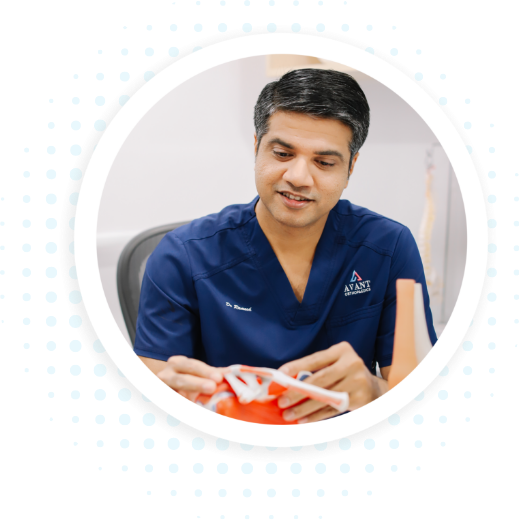
Dr Ramesh, a fellowship-trained orthopaedic surgeon, focuses on shoulder, knee, and arthroscopic sports surgery.
Dr Ramesh obtained his MBBS and Master’s in Orthopaedic Surgery from the National University of Singapore and completed Advanced Surgical Training. He earned his Fellowship from the Royal College of Surgeons of Edinburgh in Trauma and Orthopaedics. He was awarded the HMDP scholarship for a clinical fellowship in Shoulder and Knee Surgery in Dublin, followed by the Tan Tock Seng Scholarship for a Sports Fellowship in Knee Surgery in Barcelona. He also completed a Shoulder Surgery Fellowship at Hospital Del Mar and was trained in arthroscopic joint reconstruction and joint replacement surgeries.
What are the Treatments Available for Knee Pain?
Upon receiving a knee pain diagnosis, a wide array of treatments is available to provide relief and comfort. These can be tailored by your healthcare provider to best suit your conditions.
Non-Surgical Treatments for Knee Pain
Assistive Devices

Your doctor may recommend using knee braces or supports to alleviate strain on your knee. They can provide additional support and offer relief during physical activity.
Corticosteroid Injections

This injection delivers anti-inflammatory medication to the knee joint. While relief is temporary, corticosteroid injections can be valuable in managing acute episodes of knee pain.
Hyaluronic Acid Injections

This treatment supplements the knee’s lubricating fluid, potentially reducing friction and improving pain.
Surgical Treatments for Knee Pain
Arthroscopy

Arthroscopy is a minimally invasive procedure that offers a view into your knee joint, allowing skilled surgeons to address issues directly. It’s a precision-driven approach that aims to mend and restore, offering the prospect of alleviating pain and enhancing joint function.
Knee Osteotomies
These procedures are forms of knee preservation surgery which reduces pain and improves knee function and quality of life. The principle of osteomy around the knee is to rebalance the pressure force between the inner and outer compartments of the knee.
Partial Knee Replacement
When severe damage takes a toll on your knee joint, partial knee replacement becomes a solution for damage that’s confined to one or 2 compartments. This transformative procedure involves replacing damaged single of double compartments with prosthetic counterparts, offering enduring pain relief and restoring mobility.
Total Knee Replacement
Total knee replacement surgery is a procedure designed to address severe knee joint damage caused by conditions like osteoarthritis, rheumatoid arthritis, or injury. It is typically considered when non-surgical treatments no longer provide effective relief.
What are the Symptoms of Knee Pain?
- Sharp and stabbing pain
- Clicking or popping sounds
- Swelling and inflammation
- Feeling of instability
- Limited range of motion
If you notice any of these signs, we recommend reaching out to our specialists at Avant Orthopaedics for proper diagnosis and treatment.
What are the Common Causes of Knee Pain?
Sprains
These result from ligaments being stretched or torn. Sudden twisting or impacts can strain these ligaments, requiring medical attention.
Strains
Similar to how rubber bands weaken after overstretching, muscles and tendons can experience the same due to excessive force or repetition. Activities that push them beyond their limits, such as improper lifting techniques or sudden, forceful movements, can lead to strains and contribute to knee pain.
Overuse
Just as items in our household wear out from prolonged use, our knees can suffer from consistent, repetitive stress without adequate rest.
Fractures
Knee pain can also stem from fractures, where the integrity of bones is compromised. A sudden impact or significant force can result in a bone break, causing pain, swelling, and limited mobility. This is a serious concern requiring immediate medical attention to ensure proper healing and prevent further complications.
Arthritis
This common condition can trigger knee pain. It comes in two forms: Osteoarthritis and Rheumatoid Arthritis. The former occurs when the protective cartilage cushioning the knee’s bones wears down due to ageing, excessive use, or injury. The latter is caused by the immune system attacking itself, resulting in inflammation within the synovium, a protective lining surrounding the joint.
How Can the Source of Your Knee Pain Be Diagnosed?
The first step is to visit your healthcare professional and describe your knee’s condition. We strongly discourage self-diagnosis, as it may require the use of medical devices and methods such as:
- Physical examinations
- Imaging techniques such as X-Rays and MRI
- Evaluating your medical history
- Further questioning of your symptoms
While it may seem tempting to self-diagnose and attempt Do-It-Yourself (DIY) treatments due to convenience, identifying the source of your knee pain is a collaborative effort between you and the healthcare provider. Moreover, not seeking proper treatment promptly may worsen the condition.

What is the Anatomy of the Knee?
To comprehend the importance of maintaining knee health and the causes of knee pain, it is crucial to understand the anatomy of our knees. We have dissected its main components to provide a clearer explanation of their unique roles in maintaining our mobility.
At the core of the knee’s anatomy are the femur and tibia, two major players that come together to form the primary joint connection. Protecting them is the patella, also known as the kneecap, which acts as a shield for the joint and contributes to knee extension during movement.
Ligaments are robust bands of connective tissue that provide stability to the knee and keep everything together. They can be likened to strong ropes connecting one bone to another, promoting stability and preventing overextension. The knee has four main ligaments:
ACL and PCL are situated in the centre of your knee, intersecting in an "X" shape. The former assists in the control and rotation of the shin bone, while the latter controls backward movement.
They are positioned on the sides of your knee, with MCL on the inner side and LCL on the outer section. In addition to providing stability, they also prevent excessive side-to-side movement.

Why is Knee Health Important?
Whether it involves walking, running, jumping, or standing still, these movements rely on the intricate mechanism of the knee. In the simple act of walking, which we engage in daily, the complex inner workings of our knees flex and extend, absorbing impact and distributing forces. From ascending staircases to jogging in the park, well-functioning knees not only enhance mobility and independence but also enable you to live life to the fullest.
Maintaining longevity and ageing gracefully are often attributed to remaining physically active even as you reach your later years. Healthy knees play a vital role in this endeavour. By preserving knee health, you are better equipped to maintain an active lifestyle as you age, reducing the risk of mobility limitations and chronic pain. Furthermore, this translates to a higher quality of life and a greater sense of fulfilment as the years go by.
Pain, discomfort, and limited mobility can significantly impact your daily experiences. Healthy knees allow you to fully immerse yourself in life's joys without the distraction of constant ache. From pursuing your passions to cherishing precious moments with loved ones, optimal knee health empowers you to live life to the fullest.
How Can You Reduce the Risk of Developing Knee Pain?
Taking steps to reduce the risk of developing knee pain and preserving their condition is essential. Here are some tips:
Your knees support your body weight with each step. Maintaining a healthy weight ensures this load remains manageable, minimising undue strain on the knee joints.
Swimming, cycling, and brisk walking are examples of low-impact activities. They don't subject your knees to excessive stress and can improve your cardiovascular health.
Whether lifting weights or performing daily tasks, using proper techniques is crucial to prevent undue strain on your knees. Practising correct posture and alignment distributes forces evenly across the joints.
Rest is integral to any fitness regimen. Overexertion can lead to fatigue and increase the risk of injuries, including knee pain. Allow your body the time it needs to recover and repair.
When Should You Seek Professional Help?
If your knee pain is due to an injury or you experience the following symptoms, seeking professional help is advised:
- You experience intense pain
- Your knee looks swollen
- You are unable to bear weight
- Your knee has a history of injury or trauma
- You can’t perform daily activities
- There is a deformed joint
- The pain persists and worsens after several days
Are You or a Loved One Suffering from Knee Pain?
Knee pain can be a debilitating condition that prevents you or your loved ones from living life to its fullest. Feel free to book an appointment to receive a personalized consultation where we will diagnose your condition and recommend a suitable treatment.

Related Treatments

Total and partial knee replacement are surgical procedures that replace damaged or worn parts of the knee joint with artificial implants. These surgeries help relieve pain, restore movement, and improve quality of life for patients with severe arthritis, injury, or joint degeneration.

Knee injections are a nonsurgical treatment that delivers medication into the knee to relieve pain and inflammation from osteoarthritis, tendon injuries, bursitis and other conditions. Options include corticosteroids, hyaluronic acid viscosupplementation and PRP, helping improve mobility and delay the need for surgery.
Find Us Here
Novena
9 AM to 1 PM (Saturday)
Closed on Sundays and Public Holidays
Parkway
9 AM to 1 PM (Saturday)
Closed on Sundays and Public Holidays

