
Ligament Sprain
Book An Appointment
Key Takeaways
- Ligament sprain is a torn or stretched ligament; symptoms include pain, swelling, stiffness, or bruising.
- Playing sports, falling, or breaking a fall are common causes of ligament sprains.
- Treatment usually involves non-surgical methods such as PRICE (Protection, Rest, Ice, Compression, and Elevation), rehabilitation or physical therapy, using external support or mobility aids, or taking anti-inflammatory medication.

What is a Ligament Sprain?
Ligaments are strong, fibrous connective tissue that binds your bones together across joints. They help to stabilize and support your joints and keep your bones in place. When a ligament around your joint is partially injured, it is a sprain. If it’s completely injured and loses fibres continuity, it is termed a rupture. Ligament sprains are common injuries and can happen to anyone.
Although similar and used interchangeably at times, a sprain and a strain are different and indicate injuries to separate parts of the body. Both refer to a stretch or tear, but your ligament is affected when you have a sprain, while your muscle or tendon is injured when a strain occurs.
Symptoms of Ligament Sprain
While symptoms of a sprain will differ depending on how bad the injury is, here are some common signs that will help you identify whether you have a ligament sprain.
- Pain
- Swelling
- Stiffness
- Inflammation
- Tenderness
- Bruising or discoloration
- Hearing a ‘pop’, a snap, or feeling a tear in the affected area when the injury occurred
- Weakened joint
- Restricted movement
- Unable to use the affected joint or move it properly
- Unable to put weight on the affected joint
What Causes Ligament Sprain?
A ligament sprain happens when your ligaments are torn or twisted. This can be due to your ligaments being over-extended, unnaturally stretched, or forced out of their natural range of movements or positions.
Ligament sprains can occur because of a fall, being struck, or any other sudden impact. One of the most common sprains is a sprained ankle, which can happen when playing sports. Sprained wrists are also prevalent where you instinctively try to break your fall by extending your hand, only to end up injuring your wrist.
Risk Factors
Some common situations that lead to ligament sprain include:
- Not warming up or cooling down properly before and after sports
- Tripping on uneven surfaces
- Getting into automobile accidents
- Trying out a new sport or exercise without the appropriate equipment or guidance
- Over-exerting your muscles without sufficient rest
- Performing repeated actions

Grades of Sprains
Sprains can be graded into three levels based on their severity and symptoms:
Grade 1 Sprain
Grade 1 sprains have slight tissue damage, resulting in minor tenderness, pain, swelling, and stiffness. Sprains of this level occur because the ligament has been stretched beyond its limits but with minimal tearing. If you have a grade 1 sprain, you will still be able to retain your normal range of motion and use your joint without it feeling unstable. The recovery period is also the shortest for this grade whereby your injury will heal within two to three weeks.
Grade 2 Sprain
A grade 2 sprain occurs when your ligament is partially torn or ruptured. One or more ligaments are injured in this case, leading to noticeable swelling, tenderness, or bruising. While you will feel little to no instability in your joints, your range of motion may be affected due to the moderate pain that you will be experiencing. It may be challenging to use your injured joint or put weight on it, and you may require a brace or some other form of support to help you recover. Sprains of this degree will take around four to six weeks to heal.
Grade 3 Sprain
Grade 3 sprains are the most severe of the sprains, as this sprain involves a completely torn or ruptured ligament. You may have heard a pop from the affected area when the injury occurred, and you will experience significant swelling, bruising, pain, and maybe even bleeding. Your range of motion will be restricted with a sprain of this level, and attempting to move the affected joint will hurt. You will also have unstable joints and will be unable to bear weight on the injured joint.
Sprains of a grade 3 level will require a brace or cast for a few weeks to heal. Surgery and rehabilitation may even be required to regain complete functionality depending on the severity of your injury, subject to advice from your attending doctor. It will take at least three months or longer for a sprain of this level to recover depending on the severity of your injury.
Diagnosing Ligament Sprain
Diagnosing with a Physical Examination
Your doctor will perform a physical examination to check if you have a ligament sprain and examine the affected area for the following:
- Sensitivity
- Discomfort
- Pain
- Bruising
- Tenderness
- Strength of your muscles
Your doctor will also ask you questions about your medical history, the symptoms you have been experiencing, when your symptoms first appeared, and if there was an injury which caused the sprain. By assessing the affected area and checking the movement of your joint, they can determine the extent of the injury. The location of your torn or stretched ligament will also help them to establish the severity and nature of your injury.
Diagnosing with Imaging Tests
Sometimes your doctor may also prescribe one or more of the following non-invasive imaging tests that take pictures of your affected joint and tissue surrounding it to accurately diagnose your ligament sprain or rule out a more serious problem, such as a bone fracture.
- X-ray scan: Commonly used to assess bones and joints, an X-ray scan may be conducted to rule out a more serious condition such as a fracture, dislocation, or arthritis.
- Ultrasound: Ultrasound imaging of your affected area may be conducted to image your bone and tissue to examine your ligaments and accurately diagnose your sprain.
- Magnetic resonance imaging (MRI): Your doctor may run an MRI to image your affected bone or joint to check on your joint, determine if there is a sprain, and diagnose the severity of your injury.

How to Treat Ligament Sprain
After your doctor has diagnosed your sprain, you will most likely be prescribed one or more of the following treatments, depending on the severity of your injury. The non-surgical therapies will suffice in most cases, and surgery is rarely a necessity for ligament sprains.
Treating Ligament Sprains via First Aid
PRICE therapy
PRICE is an acronym that stands for Protection, Rest, Ice, Compression, and Elevation. This therapy is suitable for those with grade 1 and 2 sprains and can be carried out in the comfort of your own home. It is important to use PRICE therapy during the first few days of getting injured so you can recover as soon as possible.
- Protection
Protect your injury and do not aggravate it further by using external support or wearing shoes with proper support. Avoid consuming alcohol, massaging the injured area, or doing activities like running.
- Rest
Keep your weight off of the affected joint for at least 24 to 48 hours. Do not lift, stress, or pressure the joint for a few days after your injury as it will worsen your condition. Stop what you are doing if you feel pain, swelling, or discomfort.
- Ice
Avoid heat if you have a ligament sprain. Ice the injured area with ice or an ice pack wrapped in a cloth, towel, or plastic bag for 10 to 20 minutes every few hours. The cold will help to reduce inflammation and relieve pain and swelling. Do not ice the affected area directly or ice your injury for too long, as this may aggravate your injury.
- Compression
Wrap the affected area in an elastic bandage or compression sleeve, as this works to support your injury and alleviate swelling. Bind your injured joint firmly, but not tightly, starting from below to above or where it is furthest from your heart. However, should you feel more pain or numbness, or if there is swelling beneath the wrapped area, loosen it. You should also limit your movement and keep it to a minimum.
- Elevation
Place your injured joint on a pillow and keep it elevated above heart level, especially at night, to prevent fluid from collecting so swelling will be alleviated.
Treating Ligament Sprains via Physical Therapy or Rehabilitation
Physical therapy or rehabilitation will prevent abnormal scar tissue from forming. It will help you regain your range of motion and even strengthen the injured area. However, do not rush your recovery, as this may worsen your injury. On the other hand, do not stay inactive for too long either, as the scar tissue will limit what you can do. Once you can move your injured joint, move it so your muscles do not deteriorate or become stiff. Nonetheless, stop what you are doing if you feel sudden discomfort or severe pain.
If you are seeing a physical therapist, they will also be able to recommend techniques or exercises for you to do. Doing those exercises will help to loosen or strengthen the affected region as they boost healing, stamina, flexibility, and stability. Your therapist may also prescribe a soft tissue massage or electrotherapy, which will help with pain relief.
Treating Ligament Sprains with External Support or Mobility Aid
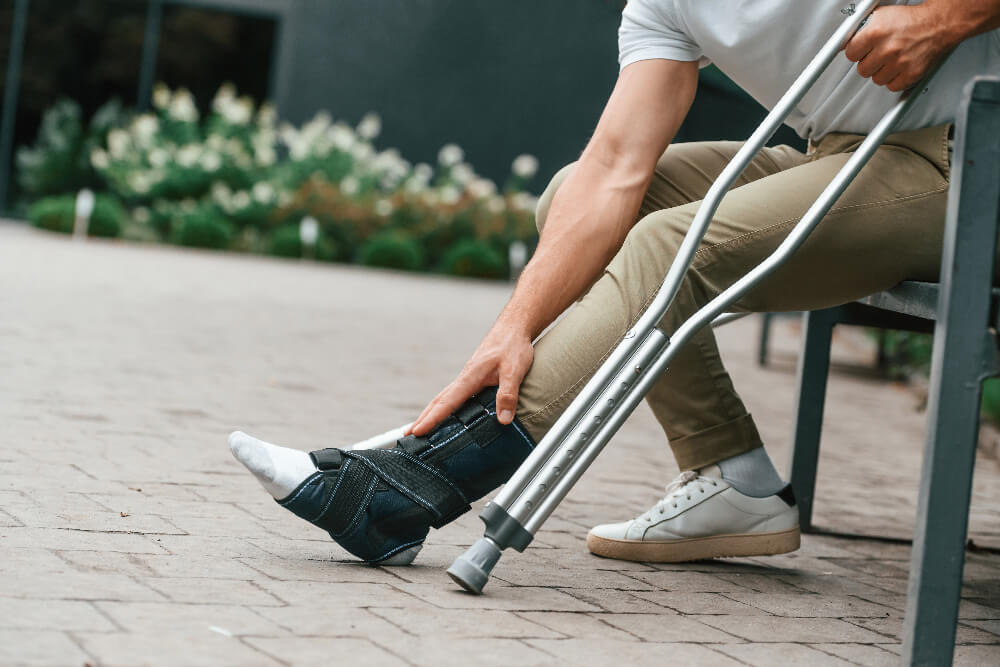
Your doctor may prescribe external support or mobility aids such as a brace, splint, cast, or crutches to protect your injury and not stress the affected joint further. If you have a moderate or severe sprain, your affected joint may be put in a hard cast. Using external support or mobility aids supports your injured joint and relieves it of pressure while allowing you to get back to your daily routine.
Treating Ligament Sprains with Medication
Medications can help to reduce inflammation, pain, or swelling from your ligament sprain. Your prescriptions may include nonsteroidal anti-inflammatory drugs (NSAIDs), pain relievers, or topical painkillers. Please consult your doctor before taking any medication.
Treating Ligament Sprains with Surgery
If you sprained the same joint numerous times or have a severe sprain, you may require surgery. An orthopaedic surgeon will operate on you to repair or reconstruct your torn ligament or ruptured tissue so you can regain strength and function in the affected region. Rehabilitation or physical therapy may also be prescribed as a follow-up to your surgery.

How to Prevent Ligament Sprain
Unfortunately, ligament sprains are inevitable if you are an athlete or if the nature of your work calls for specific repetitive actions. Nevertheless, there are certain steps you can take to strengthen your joints and prevent ligament sprain.
- Stay in shape and maintain a healthy weight. Do a variety of exercises so you do not overextend a particular body part and increase the intensity of your exercises progressively rather than abruptly. Do not forget to warm up and cool down properly before and after exercising. By stretching regularly and doing strengthening exercises, you can protect your joints by conditioning your muscles.
- Avoid jumping right into sports or activities where you have not received the proper training. Ensure you have the proper guidance and use the appropriate equipment when participating in physically taxing activities. If a part of your body hurts or if you are too fatigued while participating in an activity, be sure to stop at once.
- Give your body enough time to rest and recover between sports or other physical activities. Do not push it to its limit and get sufficient rest, especially after intense exercises.
- Ensure spaces where you often walk are free from clutter so you will not trip and fall. If you are reaching something at a height, use the proper equipment to avoid falling.
- Wear suitable footwear that fits. Ensure your shoes have the proper support and protection, especially when you are doing activities that can be taxing on your joints. Avoid high heels where possible.
- If you have difficulty walking or are at risk of frequent falls, use a cane or a walker. However, do not use external support or mobility aids for longer than is necessary as your muscles can weaken after being accustomed to the support.
Getting Medical Attention
Although a ligament sprain may not seem very significant, your injury may worsen if left untreated. Hence, it is imperative that you seek medical attention to ensure proper recovery of your injured joint. Contact us to book an appointment and receive personalised care, where we will diagnose your condition and recommend the best course of action.
Frequently Asked Questions (FAQ)
Depending on the severity of your injury, it will take you anywhere between two weeks and three months to recover fully. Your attending doctor should be able to provide you with a more accurate timeline.
After a ligament sprain, you should refrain from putting any weight or unnecessary pressure on your injured joint as this would hinder your recovery. Instead, you should protect the affected area by keeping your weight off of it and resting as much as possible.
While it is possible for your ligament sprain to heal on its own if you follow the PRICE therapy method as outlined above, you should seek medical attention at once if your symptoms do not subside.
Regardless of the grade of your ligament sprain, you should abstain from exercising and participating in all sports until you have made a full recovery. Taking part in physical activities will only exacerbate your injury and extend your recovery period.
Surgery is not required for most ligament sprains unless you have a severe injury where your ligament is badly injured. Your doctor will consider the intensity of your sprain and medical history before advising you on possible treatments.
Related Conditions
Fractures and dislocations are common injuries caused by trauma, falls, or accidents that affect bones and joints. A fracture refers to a break or crack in a bone, while a dislocation occurs when bones in a joint are forced out of position. Symptoms include pain, swelling, deformity, and limited mobility. Diagnosis involves physical examinations and imaging tests such as X-rays or MRI scans. Treatment varies depending on severity, including immobilisation, the PRICE method, or surgery such as open reduction and internal fixation. Proper care, rehabilitation, and preventive measures like regular exercise, bone screening, and a healthy diet support recovery and help prevent future injuries.
Bone tumours are abnormal growths found within any bone in your skeletal system. However, bone tumours may typically be found on the larger bones in your body, including the femur, tibia, humerus, ribs, spine, and pelvis. In most cases, bone tumours are benign (non-cancerous) and will usually go away after some time, even without non-surgical interventions.
Find Us Here
Novena
9 AM to 1 PM (Saturday)
Closed on Sundays and Public Holidays
Parkway
9 AM to 1 PM (Saturday)
Closed on Sundays and Public Holidays

