
Lower Back Pain Treatments in Singapore
Book An Appointment
Key Takeaways
- Nonsurgical methods such as physical therapy, lumbar epidural steroid injections and medications can help to treat lower back pain and restore your lower back’s flexibility, strength, and range of motion.
- Surgical methods such as spinal fusion, disk replacement, diskectomy, kyphoplasty and vertebroplasty and laminectomy are needed if pain persists even after nonsurgical treatment or to treat more severe complications.
- Home remedies to relieve lower back pain include exercises such as pelvic tilts, bridges, and kneeling lunge stretches.

Our Orthopaedic Doctor and Surgeon for Lower Back Pain
Dr. Razmi
FAMS (Ortho) | M Med (Gen Surg) (SG) | FRCSEd (Gen Surg) | MBBS (SG)
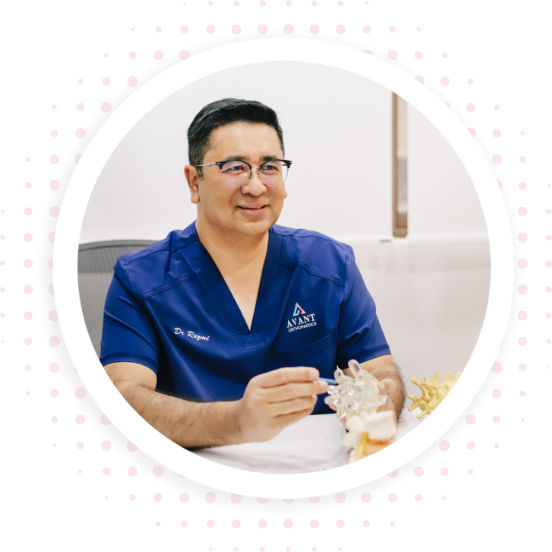
Dr. Razmi, a practicing orthopaedic and spine consultant at Mount Elizabeth Novena Hospital.
Dr Razmi routinely performs discectomy (minimally invasive surgery), decompression surgery, spinal fusion, motion preservation surgery including dynamic stabilization and dynamic fusion technologies and lumbar and cervical disc replacements. He is the first surgeon in Singapore to perform stand-alone anterior approached spine fusion using the Synfix implant.
What is Lower Back Pain?
Lower back pain generally affects your lumbar spine, the lower part of your spine located between the ribs and the pelvis made up of five vertebrae (or bones). You will also find several nerve pairs connected to the lumbar spine. It may also affect the surrounding muscle and tissue near or around the lumbar spine, including the glutes (buttocks), hips or legs.
Lower back pain symptoms vary but are typically characterised by the pain or discomfort you feel in your lower back, whether idle or moving. Some people may report the pain as dull and throbbing, while others describe it as sharp and stabbing; in many cases, the level of pain fluctuates from time to time.
What Are The Symptoms of Lower Back Pain?
Lower back pain symptoms vary but are typically characterised by the pain or discomfort you feel in your lower back, whether idle or moving:
- Pain that comes and goes in the lower back.
- Increased pain when you bend, sit down or lift items.
- Pain that triggers without warning.
- Stiffness in your lower back.
- Frequent or infrequent muscle spasms.
- Posture difficulties due to the pain (or other symptoms) you experience.
Common Causes of Lower Back Pain
Several factors, including the natural process of ageing, can cause lower back pain.
- Overexertion during physical activities, such as gardening or participating in sports events
- Disk Injury/Degeneration
- Spinal Conditions such as spinal stenosis and spinal fractures.
- Compression Fracture that further weaken your spine and change your posture.
- Scoliosis: A condition characterised by an abnormal spinal curve that makes your back appear asymmetrical
- Other health conditions such as spinal tumours, kidney stones, inflammatory arthritis, etc.
Diagnosis of Lower Back Pain
Lower back pain can be diagnosed through physical examinations and imaging tests such as X-ray scan, bone density test and Magnetic resonance imaging (MRI).
Non-surgical treatments for Lower Back Pain
Physical Therapy

Physiotherapy can help you reduce pain and swelling, strengthen your lower back muscles to support your spine, and slowly restore your range of motion, resilience, and flexibility. Your physiotherapist will show you various exercise methods to help with this and also passive modalities to help manage your lower back pain, such as using heat and ice packs.
Active therapies help decrease painful symptoms, strengthen your lower back, recover flexibility, and prevent future complications. You can continue these therapies even after being discharged, so you can continue to enjoy unhindered mobility and independence at all times.
Note that you should start with simple exercises, as suggested by your physiotherapist. As your condition improves, you can slowly build up the intensity and duration of your workouts.
- Core strengthening exercises: Your core typically refers to your abdominal, back, hips, buttocks, and pelvic muscles, which are vital to supporting the lower back. With a stronger core, you can enjoy better posture and stability while helping to prevent further lower back pain. It also helps reduce the stress on your intervertebral disks, further improving spinal stability and strength.
- Lumbar stabilising exercises: Various stretching exercises, such as hamstring stretches and squats, help strengthen your hip and leg muscles, further improving stability, distributing weight evenly across your lower body, and reducing pain.
- Postural exercises: Maintaining good posture can go a long way toward minimising strain on your lower back, improving muscle and tendon flexibility, and ensuring you can move freely without pain.
- Chiropractic adjustment: A licensed chiropractor uses their hands or medical instruments to manipulate joints to minimise pain, restore your body’s alignment, and address aches, pains and stiffness.
- Osteopathic Manipulation Treatment (OMT): This treatment is performed by a qualified doctor of osteopathy (DO) to treat mechanical pain and restore structural imbalances by gently pressing and manipulating muscles, soft tissues, and limbs.
- Back brace: An inelastic, wrap-around brace may help stabilise your lower back. In some cases, it may help to reduce lower back pain in tandem with other physical therapies, especially exercise.
Home Remedies to Relieve for Lower Back Pain

- Pelvic tilts: Simple pelvic tilts require you to lie on your back with your feet flat on the ground and your knees raised and bent 60 degrees. Next, press your lower back against the ground as you exhale and tilt your waist or pelvis backwards; when you inhale, relax your lower back from the ground and tilt your waist forward. Make a point to move only your lower back (the lumbar spine). You can add other movements (leg raises, for example) to the pelvic tilt once you get used to it.
- Bridges: First, lie down on the ground, keeping your feet flat on the floor and hip-width apart. With your arms resting by your sides and your shoulders on the floor, press your feet into the floor and slowly lift your buttocks off the ground until your body is in a straight line. Hold this posture for 10 to 15 seconds, then slowly return to the floor. Repeat this 15 times in 3 sets, taking a one-minute break between sets.
- Kneeling lunge stretch: Start from a kneeling position with one foot flat on the floor. Place both hands on your thigh and evenly support your body’s weight between your legs. Carefully shift your hips forward until you feel a gentle stretch at the front of the hip. Maintain your stretch for up to 30 seconds for each side.
Lumbar Epidural Steroid Injections
These injections deliver anti-inflammatory medicine into the space around the spinal nerves in the lower back, helping to treat chronic pain caused by inflammation or irritation of these nerves. It is only a temporary measure to relieve pain, but some have reported being pain-free for about three months, though durations vary from person to person.
Medications
Medications can provide much-needed relief to your lower back pain. Nonsteroidal anti-inflammatory drugs (NSAIDs) like aspirin can relieve pain and reduce swelling in and around your lower back. You may also be prescribed muscle relaxers to help alleviate any back spasms you might experience.
Read More About 10 Ways to Relieve Back Pain Without Surgery.
Surgical treatments for Lower Back Pain

Surgery is primarily reserved for lower back pain that does not respond well to nonsurgical treatment methods or in cases where people continue to experience persistent pain even after receiving nonsurgical treatment. It may also be necessary if you have sustained other injuries requiring prompt medical attention.
Spinal Fusion
Spinal fusion involves permanently connecting (or fusing) two vertebrae to prevent movement between them and reinforce your back’s structure. It also allows both of these vertebrae to heal as one single bone. The surgical procedure is typically recommended in cases where you have scoliosis, spinal instability or weakness, herniated disks, or other spinal conditions of concern.
During the procedure, the surgeon may approach your spine from either the back, front, or side, or a combination. Depending on the severity of symptoms or other concerns, they may also opt for an open or minimally invasive approach. For the fusion to occur, the surgeon will insert a bone graft either taken from your body or a deceased donor; they will place the bone graft between the vertebrae (where it needs to go) and then install metallic screws, rods, or plates to keep the vertebrae and bone graft in place while your spine heals.
After the surgery, you may need supplementary physiotherapy sessions to help you regain your balance and maintain good posture. Sometimes, a back brace may be necessary to facilitate your recovery.
Disk Replacement
A disk replacement involves replacing a damaged or degenerated intervertebral disk with an artificial one. The treatment aims to maintain flexibility and range of motion in your spine if a disk is injured due to a fracture, a herniated disk, or some other issue affecting its normal functioning. The artificial disk is typically made from metal, plastic, or other durable materials.
During the procedure, a surgeon will make an incision on your abdomen and carefully push blood vessels, muscles, and organs aside to access the damaged or degenerated disk. They will then carefully remove it from your spine and insert the artificial disk into the space the damaged disk formerly occupied. Once done, they will return your internal parts to their original location and close the incision.
Diskectomy
An alternative to disk replacement, a diskectomy is the partial or complete surgical removal of a herniated disk. A diskectomy is typically needed for severe cases of herniated disks where nonsurgical methods have proven unsuccessful in treating lower back pain.
A diskectomy can also be an open or minimally invasive procedure. Whichever one the surgeon chooses, the surgeon will carefully access your spine to remove a part of or the entire herniated disk, depending on the extent of damage caused to your spine. If the whole disk needs to be removed, a spinal fusion will be required to maintain your spine’s stability and flexibility.
Kyphoplasty/Vertebroplasty
Kyphoplasty and vertebroplasty treat compression fractures and prevent the compressed vertebrae from collapsing. They employ similar methods, except that kyphoplasty involves inflating balloons in the space between the spinal vertebrae, then removing the balloons and filling that space with medical cement to support the spinal column. Meanwhile, vertebroplasty injects medical cement to hold the bones.
Both procedures are minimally invasive, requiring a small incision on your back to access the spine. The surgeon will insert a hollow needle called a trocar into the incision and move it towards the compressed vertebra, guided by fluoroscopy, a kind of X-ray, to reach its intended destination.
Kyphoplasty inserts and inflates a balloon through the trocar; the balloon helps to restore vertebral height and provides a space for your surgeon to inject the medical cement to strengthen the compressed bones. In contrast, vertebroplasty directly injects the medical cement into the affected area to hold the bones in place.
Laminectomy
A laminectomy is a surgical procedure to remove the lamina, which protects and supports the back part of the spinal cord, as part of treatment to cure spinal stenosis and herniated disks. This procedure aims to relieve pressure on the spinal cord if it is impinged by the lamina and make more room for the spinal cord.
During the procedure, your surgeon will make an incision on your lower back and carefully separate your skin, muscles, and other internals to reach your spine. They will examine your lumbar spine to assess how much of your lamina needs to be removed; once confirmed, they will remove parts of your lamina as needed, along with any bone spurs, disk fragments, and other damaged tissue or bone in the way. If necessary, the surgeon will also widen the spinal canal or perform a spinal fusion. Once complete, they will return your internal parts to their original position and close the incision.
When Should You Seek Professional Help?
It is always a good idea to have your lower back pain examined promptly to avoid complications with your mobility and independence. Here at Avant Orthopaedics, our professional orthopaedic specialists are ready to support you with comprehensive medical support to get you back on your feet. Contact us to book an appointment and receive personalised care, where we will diagnose your condition and recommend the best course of action.
Related Treatments

Lumbar fusion is a surgical procedure that permanently joins two or more vertebrae in the lower spine using bone grafts or implants. By fusing the vertebrae into a single solid bone, the procedure stabilises the spine, reduces painful movement, and helps treat conditions such as arthritis, spondylolisthesis, fractures, or scoliosis.

Vertebroplasty and kyphoplasty are minimally invasive procedures used to treat vertebral compression fractures caused by osteoporosis or bone cancer. Vertebroplasty involves injecting surgical cement directly into the fractured vertebra, while kyphoplasty uses a balloon to restore vertebral height before cement injection. Both procedures stabilize the spine, relieve pain, and support recovery, with most patients able to resume daily activities soon after surgery.
Find Our Back Pain Clinics Here
Novena
9 AM to 1 PM (Saturday)
Closed on Sundays and Public Holidays
Parkway
9 AM to 1 PM (Saturday)
Closed on Sundays and Public Holidays

