
MCL Injury Treatments: Surgical vs. Non-Surgical
Book An Appointment

Key Takeaways
- Low-grade injuries can heal slowly over time, but if the MCL is torn, surgery is needed to restore its functions
- You can still live with a low-grade MCL injury, but you must avoid strenuous physical activities that put pressure on the healing MCL
What is the MCL?
The most discussed ligament in the knee is the anterior cruciate ligament (ACL), which is one of four key ligaments that connect your thigh bone (the femur) to the shin bone (the tibia). The medial collateral ligament (MCL) is also one of those four ligaments that not only connects these two bones, but also provides support to the knee joint. The MCL is located on the inner side of your knee on the side of the knee joint.
Find out what causes MCL injuries and what the symptoms are.
What Treatments Are Available for MCL Injuries?
What are the Non-Surgical Treatment?
Just like with ACL injuries, low-grade MCL injuries can also rely on the RICE method to help with managing pain and swelling.
- Rest: Avoid any activities that put pressure/stress on the affected knee. Let your knee heal on its own.
- Ice: Place a cold compress or ice packs to the affected knee for 15 minutes several times a day.
- Compression: Wrap the affected knee with elastic bandages or a compression wrap to reduce swelling.
- Elevation: Position your knee and leg above the level of your heart for as often as possible. You can prop up your knee with pillows.
Physiotherapy will also be needed to help reduce pain and swelling, strengthen your muscles, and steadily restore the knee’s range of motion. Your physiotherapist will show you various exercise methods to help with this, mostly involving strengthening the thighs and legs.
You’ll also be instructed on how to use a brace to stabilize the knee, or crutches so you can move around without putting weight on the affected knee. Several physiotherapy sessions will be needed before the MCL makes a complete recovery and is highly recommended for all types of MCL injuries, either before or after surgery.
Knee pain and swelling are common symptoms that can be treated with ibuprofen or nonsteroidal anti-inflammatory drugs (NSAIDs) to alleviate discomfort. Once the pain and inflammation have subsided, you’ll no longer need these.
What are the Surgical Treatments?
Most MCL injuries (even Grade 3 injuries) do not need surgery. These ligaments have a good blood supply and are able to scar down well over time.
For an MCL that’s partially torn and persistently symptomatic, it can usually be repaired by reattaching the torn parts together. The surgeon will make incisions in your knee and reattach the torn parts with suture anchors that secure the MCL back to the bone.
In severe cases where repair is impossible (because the MCL is completely torn), reconstructive surgery is necessary. This is usually recommended for athletes with knee ligament issues or who want to return to their sport after a major MCL injury. The surgeon will use a tissue graft taken from either your own body (autograft) or a deceased donor (allograft) to reconstruct the MCL.
Recovering from an MCL Injury
In many cases post-surgery, you can head home after the procedure to rest and recover. It can take anywhere between six to twelve months to make a full recovery, so it’s best not to rush the healing process. The important part is to abide by the doctor’s advice and avoid placing unnecessary pressure on the recovering knee so as to not interfere with its natural recovery.
Here are some other helpful tips to get you back into shape:
- Keep your knee completely straight to let the joint heal properly
- Don’t miss your physiotherapy exercise sessions
- Don’t immediately get back to physically strenuous activities
- Keep wearing the brace until your doctor says you no longer need it
- Declutter the house and keep fall hazards and other obstacles in a safe place
- Don’t miss your scheduled appointments with your doctor/physiotherapist
Our Orthopaedic Doctor and Surgeon for MCL Tear
Dr. Ramesh Subramaniam
MBBS (NUS, SG) | MRCS (Edinburgh, UK) | M Med (Ortho) (NUS, SG) | FRCS (Ortho) (Edinburgh, UK)
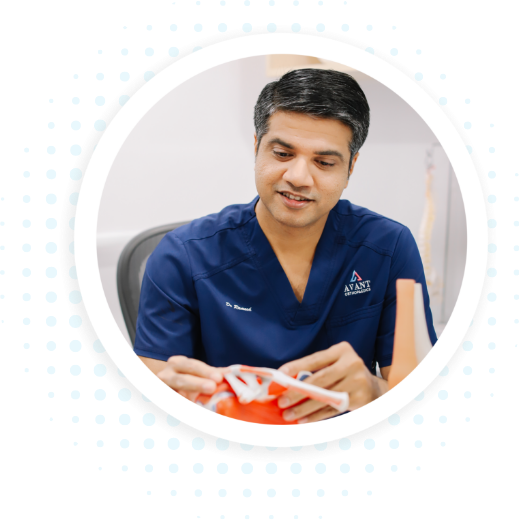
Dr Ramesh, a fellowship-trained orthopaedic surgeon, focuses on shoulder, knee, and arthroscopic sports surgery.
Dr Ramesh obtained his MBBS and Master’s in Orthopaedic Surgery from the National University of Singapore and completed Advanced Surgical Training. He earned his Fellowship from the Royal College of Surgeons of Edinburgh in Trauma and Orthopaedics. He was awarded the HMDP scholarship for a clinical fellowship in Shoulder and Knee Surgery in Dublin, followed by the Tan Tock Seng Scholarship for a Sports Fellowship in Knee Surgery in Barcelona. He also completed a Shoulder Surgery Fellowship at Hospital Del Mar and was trained in arthroscopic joint reconstruction and joint replacement surgeries.
Are You or a Loved One Suffering from an MCL Injury?
Whether it’s a minor discomfort or a sudden, pressing issue, we at Avant Orthopaedics can help identify the cause of the pain and determine the most suitable course of treatment.
Frequently Asked Questions
Yes, they can. There are some instances where an injury to the MCL also causes a related injury to one of the other ligaments. MCL tears happen to be the most common one of the four.
Thankfully, they don’t. The MCL has a good blood supply that lets it heal very quickly, though it will still take between three to six weeks to make a complete recovery. However, in cases where you have other knee injuries along with an MCL injury, you may still need surgery to treat those injuries.
What you learn from your physiotherapy sessions can still play an important part in strengthening your body. Even once your MCL injury has healed, it’s a good idea to keep doing these exercises on a regular basis.
Related Conditions and Treatments
Low-grade injuries can heal slowly over time, but if the MCL is torn, surgery is needed to restore its functions. You can still live with a low-grade MCL injury, but you must avoid strenuous physical activities that put pressure on the healing MCL
Find Us Here
Novena
9 AM to 1 PM (Saturday)
Closed on Sundays and Public Holidays
Parkway
9 AM to 1 PM (Saturday)
Closed on Sundays and Public Holidays

