
Patellar Tendinitis (Jumper’s Knee) Treatments, Symptoms and Causes
Content
Book An Appointment
What is Patellar Tendinitis?
Patellar tendinitis is an inflammation that affects the tendon that connects your patella (kneecap) to your shinbone. This condition is commonly seen in athletes who participate in sports that require frequent jumping and landing, such as basketball and volleyball, causing it to also be known as jumper’s knee. It may cause tendon weakness and knee pain, and progress to tears if left untreated.

What are the Symptoms of Patellar Tendinitis?
A telling symptom of patellar tendinitis is front knee pain. In the early stages, you may only feel pain in activities such as running, jumping, or kneeling. But as the condition progresses, the pain can worsen and interfere with your ability to participate in sports, as well as carry out daily activities.
Pain may also be accompanied by tenderness, which is often felt as a soreness or discomfort when pressure is applied to the area, such as during palpation or when kneeling. This is often a result of inflammation in the tendon and can worsen with activity.
This is a common symptom of patellar tendinitis which can vary in severity. It is usually seen as an enlargement or puffiness around the lower part of the kneecap, where the patellar tendon attaches to the shinbone (tibia). It can be subtle in mild cases, and more pronounced in severe situations.
Stiffness can be felt in the affected knee and may be noticeable after long periods of rest or inactivity. This is often due to inflammation and swelling in the patellar tendon, which can limit the normal range of motion of the knee joint.
In addition to stiffness, you may also experience tightness in the muscles surrounding the knee, such as the thigh muscles. This can worsen feelings of stiffness and restricted movement in the joint.
What are the Common Causes of Patellar Tendinitis?
Foot impairments, such as flat feet or high arches can influence the way we move and walk. This can lead to increased stress on the knee joint and patellar tendon.
Often seen in physical activities which involve jumping and running, excessive strain on the patellar tendon is often tied to overuse and repetitive stress. This causes micro-tears in the affected tendon, leading to inflammation and weakening over time. Over time, if this is left untreated, it can result in patellar tendinitis.
When the muscles around the knee are weak or imbalanced, it can lead to increased stress on the patellar tendon during physical activities. As they are unable to provide the needed support and stability, the patellar tendon has to bear more load than it can handle, leading to inflammation and injury.
A sudden increase in the intensity, duration, or frequency of a physical activity or sports training can increase the risk of developing patellar tendinitis. Training errors can not only overload the patellar tendon but also strain other muscles and tendons around the knee. Therefore, it is always recommended to allow for a gradual progression in training and listen to your body to prevent overuse injuries like patellar tendinitis.

How is Patellar Tendinitis Diagnosed?
Your doctor will begin by carrying out a physical examination of the affected knee. This could include palpating the area to check for tenderness, swelling, or warmth, which are common signs of inflammation in the patellar tendon. You may also be asked to describe your symptoms and any recent activities that may have contributed to your front knee pain.
X-rays are not used to diagnose patellar tendinitis, as this condition affects tendons which are not visible on the imaging test. However, X-rays are used to rule out bone problems that can cause knee pain and swelling, such as fractures and arthritis.
Ultrasound uses sound waves to create a detailed image of your knee in real-time, which is used to visualise tears or other abnormalities in the patellar tendon. It can also assess the severity of the damage if your condition is caused by an injury or accident. This helps your doctor develop an appropriate treatment plan that is tailored to your needs.
MRI uses a strong magnetic field and radio waves to create detailed images of the internal structures of the knee, including the patellar tendon. Your doctor may also use it to evaluate other structures in the knee, such as the cartilage, ligaments, and bones, to rule out other potential causes of knee pain and swelling.

What are the Conditions That May Be Confused for Patellar Tendinitis?
Other conditions such as patellofemoral pain syndrome, and meniscus tears, can be easily confused for patellar tendinitis due to their similar symptoms of pain, along with swelling and tenderness around the knee.
Patellar Tendinitis | Patellofemoral Pain Syndrome | Meniscus Tears | |
|---|---|---|---|
Affected Area | Below the kneecap (patella), along the tendon. | Around or behind the kneecap (patella). | Inside the knee joint. |
Symptoms | Pain, tenderness, and swelling. | Pain behind or around the kneecap, there may also be a grinding sensation. | Pain, swelling, clicking or locking of the knee joint. |
Aggravating Activities | Jumping, running, squatting. | Running, climbing stairs, sitting for long periods. | Twisting, turning, squatting. |
What Are The Treatments Available For Patellar Tendinitis?
What Are the Non-Surgical Treatments Available?
A physiotherapist can assess your condition and create a personalised exercise programme to improve the strength and flexibility of the muscles around your knee. These exercises may include stretching to improve flexibility, as well as strengthening exercises for the quadriceps, hamstrings, and calf muscles. This treatment aims to reduce pain, improve your range of motion, and minimise the risk of recurrent patellar tendinitis.
This is a simple technique when it comes to reducing pain and inflammation. It stands for:
- Rest
Your doctor may ask you to stay away from activities that may aggravate your affected knee. This could also include modifying activities to accommodate your condition to prevent your injury from worsening.
- Ice
An ice pack can be placed on the knee in intervals of 20 minutes to slow down inflammation and alleviate swelling. Remember to never place ice directly on your skin as it can lead to frostbite, along with other cold injuries.
- Compression
Applying an elastic wrap or bandage around the knee can limit the buildup of fluid and reduce swelling. Be careful to not wrap it too tightly. This may lead to a lack of blood flow to the area and cause swelling below it too. If you are unsure of how to properly apply a compression bandage, you should speak with your doctor for advice on how to do so.
- Elevation
Elevation is used to direct the flow of fluid away from the affected part of your knee to reduce swelling. You can do this through the use of cushions and pillows. However, if your swelling is severe, or if elevation does not provide relief, seek medical attention for further evaluation and treatment.
Painkillers and NSAIDs are commonly prescribed to alleviate pain and swelling in the affected area. These are often prescribed alongside other treatments such as physiotherapy, RICE, and activity modification. Additionally, while these medications may be available over the counter, you should discuss with your doctor if you want them included in your treatment plan.
A knee strap or brace are often worn just below the kneecap and are used to support the affected tendon. If you need to participate in activities that may put pressure on the tendon, these devices can help reduce discomfort and lower the risk of further injury. However, you should speak with your doctor before using them as improper use may lead to further complications.
What are the Surgical Treatments Available?
Patellar Tendon Repair surgery is performed to repair a partially or completely torn patellar tendon. During the procedure, which is usually done by open technique or arthroscopically, the torn tendon will be attached to the kneecap or tibia through the use of sutures.
Debridement is performed when there is significant inflammation and thickening of the patellar tendon. During the procedure, damaged or inflamed tissue will be removed from the tendon to reduce pain and improve function. Depending on the severity of the condition, It may be performed through arthroscopy or an open incision.

Orthopaedic Doctor for Patellar Tendinitis
Dr. Ramesh Subramaniam
MBBS (NUS, SG) | MRCS (Edinburgh, UK) | M Med (Ortho) (NUS, SG) | FRCS (Ortho) (Edinburgh, UK)
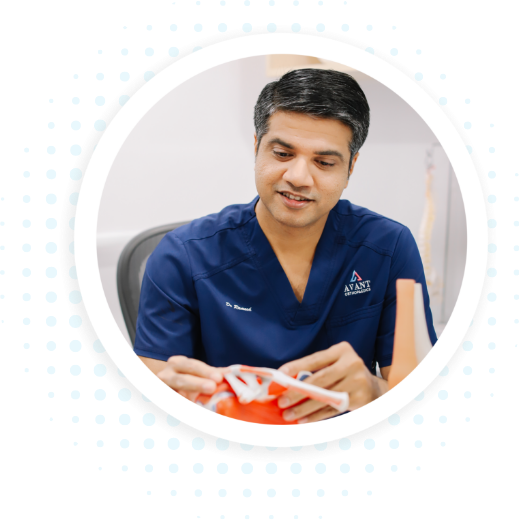
Dr Ramesh, a fellowship-trained orthopaedic surgeon, focuses on shoulder, knee, and arthroscopic sports surgery.
Dr Ramesh obtained his MBBS and Master’s in Orthopaedic Surgery from the National University of Singapore and completed Advanced Surgical Training. He earned his Fellowship from the Royal College of Surgeons of Edinburgh in Trauma and Orthopaedics. He was awarded the HMDP scholarship for a clinical fellowship in Shoulder and Knee Surgery in Dublin, followed by the Tan Tock Seng Scholarship for a Sports Fellowship in Knee Surgery in Barcelona. He also completed a Shoulder Surgery Fellowship at Hospital Del Mar and was trained in arthroscopic joint reconstruction and joint replacement surgeries.
Are You or a Loved One Struggling with Patellar Tendinitis?
If you go without seeking medical attention for too long, patellar tendinitis can affect your quality of life. As the condition worsens, basic tasks can gradually become challenging. Therefore, if you suspect that you or a loved one is suffering from this condition, contact us at Avant Orthopaedics today to receive a consultation and learn about the treatments available.
Related Treatments

Patellar tendon repair is a surgical procedure to repair or reconstruct a torn, damaged, or ruptured patellar tendon. While mild patellar tendon tears can be treated nonsurgically, moderate to severe injuries may require surgical intervention to restore the tendon’s functionality. The procedure is performed as an open surgery and may involve drilling holes and placing sutures to anchor the tendon in place and facilitate its recovery.
Find Us Here
Novena
9 AM to 1 PM (Saturday)
Closed on Sundays and Public Holidays
Parkway
9 AM to 1 PM (Saturday)
Closed on Sundays and Public Holidays

