
Posterior Cruciate Ligament (PCL) Injury
Content
- What are Posterior Cruciate Ligament (PCL) Injuries?
- What Causes Posterior Cruciate Ligament (PCL) Injuries?
- Symptoms of Posterior Cruciate Ligament (PCL) Injuries
- How to Diagnose Posterior Cruciate Ligament (PCL) Injuries
- How to Treat Posterior Cruciate Ligament (PCL) Injuries
- Preventing Posterior Cruciate Ligament (PCL) Injuries
- Getting Professional Medical Attention
- Frequently Asked Questions
Book An Appointment
Key Takeaways
- The posterior cruciate ligament (PCL) injury is located at the back of the knee joint. It connects the thighbone to the shinbone and prevents the thighbone from moving too far backwards.
- PCL injuries are divided into three grades, with Grade III signifying a severe injury that requires immediate medical attention and may warrant surgical intervention.
- Mild PCL injuries will only require non-surgical treatments for positive outcomes.
- Severe PCL injuries require a reconstruction of the PCL, as traditional ligament end to end repair generally leads to poor outcomes.

What are Posterior Cruciate Ligament (PCL) Injuries?
The PCL is located inside your knee, behind the anterior cruciate ligament (ACL), and connects the thighbone (femur) to the shinbone (tibia). It helps prevent the shinbone from moving too far backwards and supports stable knee movement. PCL injuries are not as common as other knee ligament injuries and can be more subtle and harder to detect. While they can happen to anyone, they often arise from a sports-related injury or an accident that injures the knee.
What Grade Is My Posterior Cruciate Ligament (PCL) Injury?
PCL injuries are typically divided into three different grades based on the severity of the injury.
- Grade I: There is a mild strain on the PCL.
- Grade II: There is a partial PCL tear with some looseness.
- Grade III: The PCL is torn, and there is gross antero-posterior knee instability.
What Causes Posterior Cruciate Ligament (PCL) Injuries?
A PCL injury typically results from severe knee trauma caused by a sports-related injury or an accident, where significant force causes the PCL to be twisted or stretched. Examples include falling onto a bent knee, dislocation where your knee bends too far backwards, or a poor landing after a jump. Such an injury can make walking difficult or impossible, even in the case of a partial tear. Complications may arise if nearby blood vessels are also injured in the process.
You should seek prompt medical attention if you ever have a knee injury, as an early assessment can help prevent a PCL injury from worsening. Leaving it untreated may cause symptoms to deteriorate over time and prevent you from moving around independently.
Symptoms of Posterior Cruciate Ligament (PCL) Injuries
The symptoms of a PCL injury will vary depending on its grade, but common symptoms include:
- Pain in the knee that worsens over time
- Pain that occasionally intensifies before subsiding
- Swelling around the knee, which causes stiffness
- Knee instability
- Difficulty walking or standing
- Reduced range of motion in the knee
You may also exhibit additional symptoms of pain or discomfort if other ligaments were injured.
How to Diagnose Posterior Cruciate Ligament (PCL) Injuries
Diagnosing with a Physical Examination
Your doctor will perform a physical examination to ascertain if you have a PCL injury. Besides taking your medical history, they will carefully assess your knee’s condition. You may feel some discomfort during the examination, so let your doctor know if the pain becomes unbearable. Your doctor will carefully examine your knee, slowly test its range of motion, and gently move it in different directions to check its stability. They will also compare it with your unaffected knee as a point of comparison.
Using the Posterior Drawer Test
This test checks for instability in the knee joint. You will be asked to lie down on the examination table while your doctor carefully flexes your knee between 60 and 90 degrees, with your foot resting on the table. Your doctor will then carefully push their hands against your knee posteriorly. The test is considered positive if the tibia shifts posteriorly by more than 5 mm, or if the end feel of the movement is “soft and mushy” and there is no firm end-point.
This test is considered to have the highest sensitivity and specificity for assessing the PCL and is usually accompanied by an imaging test to confirm the results.
Diagnosing with Imaging Tests
Additional tests can help to confirm the diagnosis, especially if the physical exam is inconclusive. They can also help differentiate your condition from others with similar symptoms.
- X-ray scan: An X-ray can provide a clear picture of dense structures like bone, enabling the doctor to look for any bone damage and fragments that resulted from your PCL injury.
- Magnetic resonance imaging (MRI): This test can provide higher-quality images of the soft tissues and can be more useful than X-rays for assessing the extent of damage to the PCL.
How to Treat Posterior Cruciate Ligament (PCL) Injuries
For mild PCL injuries, non-surgical treatment methods are the preferred approach to facilitate your recovery with medical support. More severe cases, such as grade 3 injuries, may require surgery depending on circumstances.
Treating Posterior Cruciate Ligament (PCL) Injuries Without Surgery
Treating Posterior Cruciate Ligament (PCL) Injuries via First Aid Techniques
The RICE method can help you reduce symptoms and manage pain.
- Rest: Avoid activities that put pressure/stress on the affected knee.
- Ice: Place a cold compress or ice pack wrapped in a towel on the affected side of your knee for 20 to 30 minutes, 3 to 4 times daily. Avoid placing ice directly on your skin.
- Compression: Bandages or a compression wrap can be used to immobilise the affected knee, reduce swelling and promote healing.
- Elevation: Position your ankle above the level of your heart as often as possible. You can prop up your ankle with pillows.
Treating Posterior Cruciate Ligament (PCL) Injuries via Immobilisation
You may also need to use crutches, a splint, or a specialized PCL brace to support your knee during recovery. This immobilisation helps prevent the tibia from sagging backwards due to gravity and allows it to heal without interruption.
Treating Posterior Cruciate Ligament (PCL) Injuries via Physiotherapy
Physiotherapy can help you reduce pain and swelling, strengthen the ligaments and tendons, and slowly restore your knee’s range of motion and flexibility. Your physiotherapist will show you various exercise methods to help with this, primarily focusing on improving knee function, including balance, flexibility, and strength. You may need several physiotherapy sessions to alleviate symptoms and restore your PCL’s condition.
- Heel slides: This simple activity can be performed while lying on your back. Keep your knees bent, then slide your heel back by bending the affected knee as far as possible. Carefully hook your other foot around the ankle (of the leg with the affected knee) to help pull the heel farther back. Hold this position for about 6 seconds and then return to your original position. Repeat this 8 to 12 times, where possible.
- Hip flexion: Lie on your back and keep the affected leg straight, with your other leg bent for comfort. Start tightening your thigh muscles in the affected leg by pressing the back of your knee while you hold it straight. As you do this, lift the affected leg slowly until your heel is about 30 cm from the ground. Hold this position for 6 seconds, then gently lower the leg. Repeat this 8 to 12 times, where possible.
You should continue these exercises even after you fully recover. They help maintain your strength and balance, and also prevent future injuries.
Treating Posterior Cruciate Ligament (PCL) Injuries With Surgery
Surgery is primarily reserved for PCL injuries that do not respond well to non-surgical treatment methods or when accompanied by other injuries, such as a knee dislocation affecting other knee ligaments. Unlike other ligament injuries, a severe PCL injury will require a complete reconstruction for better outcomes. Studies have found that surgical PCL repairs may be ineffective in the long term and may result in a re-injury.
PCL reconstruction typically uses a graft taken from another part of your body or a donor (an allograft). Your doctor will advise you about the procedure and the type of treatment to reconstruct your PCL. This would be a good time to ask questions about the surgery to resolve any doubts or concerns. Your doctor will answer your queries as thoroughly as possible.
PCL reconstruction is performed via arthroscopy, a minimally invasive procedure in which the surgeon makes small incisions at key locations around the knee. Once you are sedated, the surgeon will first apply a tourniquet around your thigh to prevent bleeding in and around the knee. They will then make small incisions on your knee to allow an arthroscope to be inserted. The arthroscope features a camera which allows the surgeon to see the inside of your knee and perform the reconstruction accurately.
The surgeon will carefully remove the damaged parts of the PCL and address other concerns, like meniscus injuries. Once done, they will harvest a tendon graft from your lower limb to replace the PCL or use an allograft. Either way, they will thread the graft into place and permanently secure it with fixation devices like screws or staples. The surgeon then stitches up the incisions.
Preventing Posterior Cruciate Ligament (PCL) Injuries
Fortunately, PCL injuries can often be prevented by taking good care of your physical health.
- Get regular exercise: Even after your recovery, you should consistently exercise to stay in good shape and reduce the risks of PCL injuries. Be mindful of the type and intensity of exercise you perform to avoid the risk of future injuries.
- Warm up first: Before starting any exercise routine, stretching and other warm-up activities can prepare your body for the intense workout.
- Stretch often: Even if you are not exercising, frequently stretching your legs can help minimise PCL injuries. You should stretch every time you wake up in the morning, and before and after your exercise routine.
- Slowly increase your physical activity: Our bodies need time to get used to physical activity. If you are new to this, start with a warm-up session to prepare for the day’s exercises. Start slowly and then steadily build up the intensity. Make sure to pace yourself appropriately to avoid straining yourself.
- Watch your step: Pay attention to where you are walking or running to avoid hazards like potholes, uneven dirt paths or rocky roads.
Getting Professional Medical Attention
At Avant Orthopaedics, our professional specialists are ready to provide comprehensive medical care to treat your PCL injury promptly. Contact us to book an appointment and receive personalised care, where we will diagnose your condition and recommend the best course of action.
Our Orthopaedic Doctor and Surgeon for PCL Injuries
Dr. Ramesh Subramaniam
MBBS (NUS, SG) | MRCS (Edinburgh, UK) | M Med (Ortho) (NUS, SG) | FRCS (Ortho) (Edinburgh, UK)
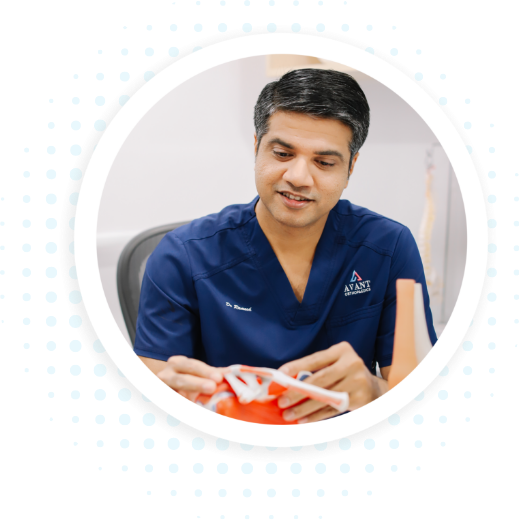
Dr Ramesh, a fellowship-trained orthopaedic surgeon, focuses on shoulder, knee, and arthroscopic sports surgery.
Dr Ramesh obtained his MBBS and Master’s in Orthopaedic Surgery from the National University of Singapore and completed Advanced Surgical Training. He earned his Fellowship from the Royal College of Surgeons of Edinburgh in Trauma and Orthopaedics. He was awarded the HMDP scholarship for a clinical fellowship in Shoulder and Knee Surgery in Dublin, followed by the Tan Tock Seng Scholarship for a Sports Fellowship in Knee Surgery in Barcelona. He also completed a Shoulder Surgery Fellowship at Hospital Del Mar and was trained in arthroscopic joint reconstruction and joint replacement surgeries.
Frequently Asked Questions
Mild PCL injuries may cause discomfort, but your mobility should not be too adversely affected. However, if left untreated, the injury may worsen and lead to complications such as gradual loss of flexibility, chronic knee instability, and increased risk of osteoarthritis.
That may depend on various factors, including age, general health, and fitness level. Younger people recover more quickly due to better tissue healing capacity, while older individuals may experience slower recovery outcomes. Your rehabilitation plan is tailored to your condition and ensures your recovery proceeds smoothly without delays.
Partial tears may heal gradually with medical support and often require only non-surgical treatment. However, more severe tears may require surgery.
Related Treatments

Patellar tendon repair is a surgical procedure to repair or reconstruct a torn, damaged, or ruptured patellar tendon. While mild patellar tendon tears can be treated nonsurgically, moderate to severe injuries may require surgical intervention to restore the tendon’s functionality. The procedure is performed as an open surgery and may involve drilling holes and placing sutures to anchor the tendon in place and facilitate its recovery.
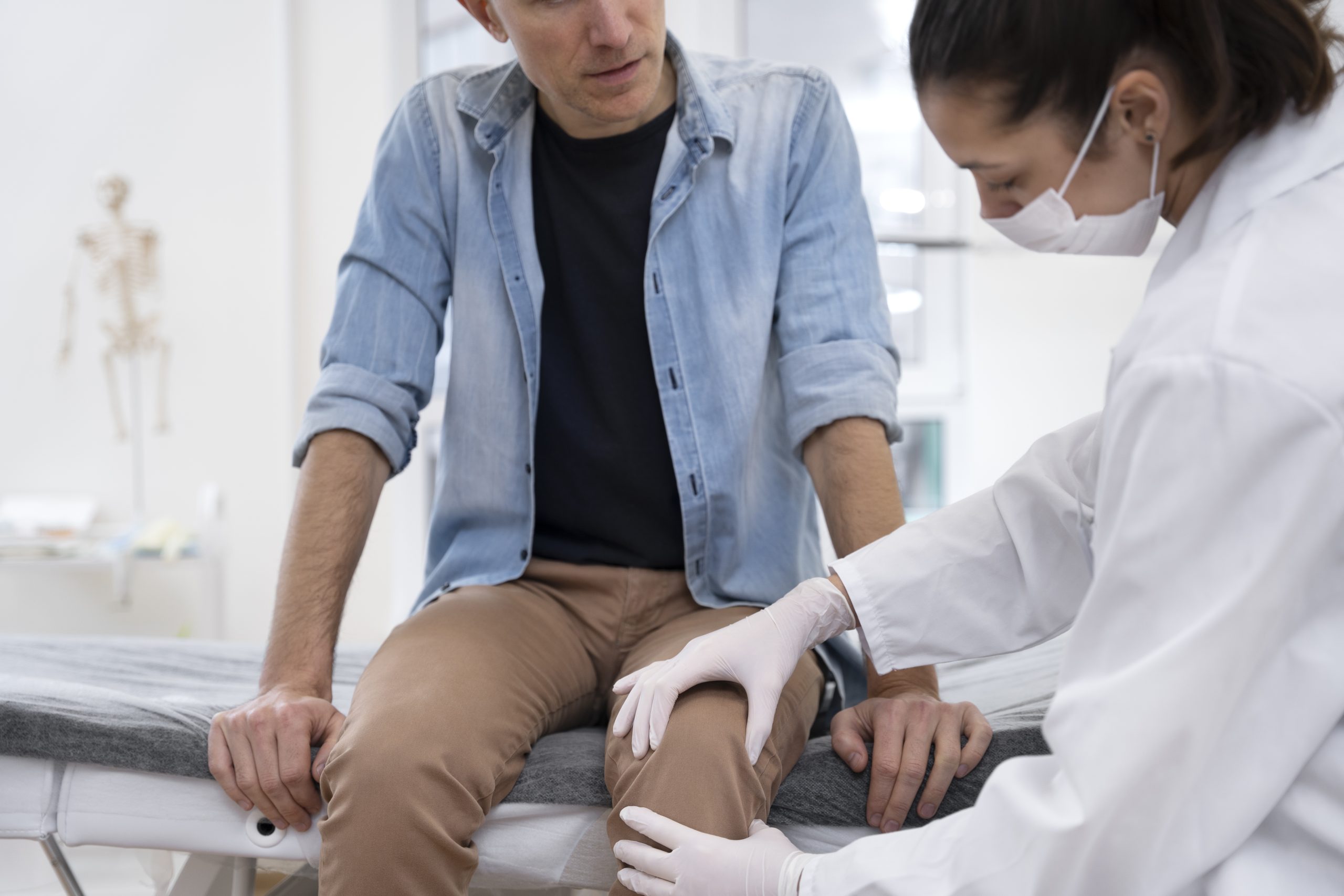
Knee ligament reconstruction is a surgical procedure that repairs or replaces torn ligaments in the knee, such as the ACL, PCL, MCL, or LCL, to restore joint strength, stability, and mobility. The surgery is often performed using minimally invasive arthroscopy, where a graft from the patient or a donor is used to reconstruct the damaged ligament. It is recommended for patients with severe ligament injuries that cause pain or instability. Recovery involves physiotherapy, pain management, and adherence to post-surgery care for optimal healing and return to normal activity.
Find Us Here
Novena
9 AM to 1 PM (Saturday)
Closed on Sundays and Public Holidays
Parkway
9 AM to 1 PM (Saturday)
Closed on Sundays and Public Holidays

