
Scoliosis Treatment in Singapore
Book An Appointment
Key Takeaways
- Scoliosis is a medical condition that describes an abnormally curved spine, either into a C-shape, an S-shape, or a Z-shape with physical signs of protruding bones when bending or the hip bone jutting outwards on one side.
- Scoliosis is more commonly found in children and teenagers, with girls most likely to be diagnosed with this condition.
- Scoliosis may be managed with non-surgical options such as physical therapy and bracing, while surgical options may include spinal fusion, expandable rods, and spinal osteotomy.
- There is no known way to prevent scoliosis, but there are lifestyle habits that can alleviate symptoms of scoliosis or hinder it from worsening.
Scoliosis Doctor and Surgeon in Singapore
Dr. Razmi
FAMS (Ortho) | M Med (Gen Surg) (SG) | FRCSEd (Gen Surg) | MBBS (SG)
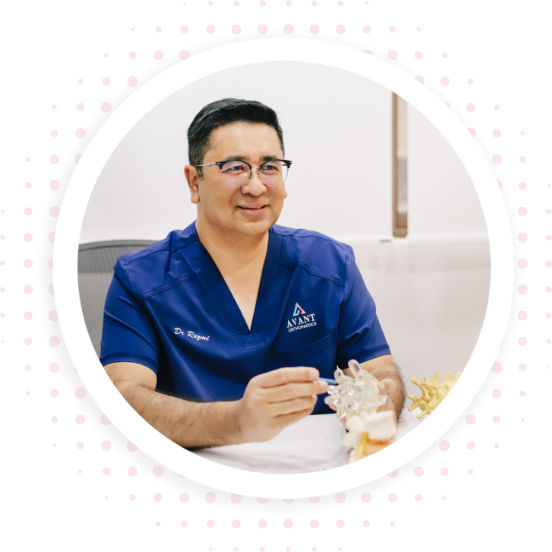
Dr. Razmi, a practicing orthopaedic and spine consultant at Mount Elizabeth Novena Hospital.
Dr Razmi routinely performs discectomy (minimally invasive surgery), decompression surgery, spinal fusion, motion preservation surgery including dynamic stabilization and dynamic fusion technologies and lumbar and cervical disc replacements. He is the first surgeon in Singapore to perform stand-alone anterior approached spine fusion using the Synfix implant.
What is Scoliosis?

Scoliosis is a medical condition where the spine is abnormally curved, typically side-to-side instead of the normal front-to-back curves throughout the backbone. These abnormal curves can happen at any part of the spine, whether at the neck (cervical spine), middle or upper back (thoracic spine), lower back (lumbar spine), or a combination of them.
Doctors usually describe the shape of the curves using the letters C, S, or Z – and these spinal curves give the appearance where the patient looks like they are constantly leaning on one side. Anyone can have scoliosis, but you may only be diagnosed with it if the curves are angled more than 10 degrees on an X-ray scan.
What Are The Types of Scoliosis?
There are three common types of scoliosis: idiopathic, congenital, and neuromuscular.
Idiopathic scoliosis
There is no known or singular cause of idiopathic scoliosis, yet it is the most common type among all three. However, research does suggest that idiopathic scoliosis may be caused by genetics or heredity.
Additionally, idiopathic scoliosis cases are categorised within the age range as below:
- Infantile idiopathic scoliosis: Babies and children from 1 to 3 years old.
- Juvenile idiopathic scoliosis: From 4 to 9 years old.
- Adolescent idiopathic scoliosis: From 10 to 18 years old.
- Adult idiopathic scoliosis: Any time after 18 years old, when the skeletal growth is complete.
Congenital scoliosis
This type of spine deformity is rare but is noticeable at birth. It is when the vertebrae or the bones that make up the spine are not properly formed during the baby’s embryonic stage, causing the spine to curve.
Neuromuscular scoliosis
It refers to the weak and imbalanced state of the muscles and nerves that support the spine. This type of scoliosis is usually triggered by other nerve and muscle conditions like spina bifida and cerebral palsy.
What does Scoliosis look like?

Symptoms
Mild scoliosis cases typically do not have unmanageable symptoms, and people with mild scoliosis can still carry out their daily activities. In the case of severe scoliosis, patients may suffer from the following symptoms:
- Pain and stiffness in the back.
- Difficulty or inability to stand upright.
- Limited range of motion.
- Pain and numbness in the legs.
While scoliosis does not always cause pain, some people may experience persistent back discomfort or stiffness. If the pain is affecting your daily activities, you may consider consulting a back pain specialist for an assessment of the underlying cause.
Physical signs
- The spine is obviously curved (normal spines appear straight).
- Spine bone jutting out either to the left, right, or outwards (when bending down).
- Asymmetrical shoulders and waist, where one side is lower than the other.
- A visible curve on the back that is typically mistaken for poor posture.
- One shoulder blade and hip are more prominent than the other.
- Unbalanced leg length.
What happens if I leave Scoliosis untreated?
On a more serious note, if you leave your scoliosis untreated, it may progress severely. You may experience the following life-threatening symptoms:
- Permanent physical deformities, especially in the ribcage and backbone.
- Breathing difficulties due to a curve in the upper spine (thoracic curve).
- Heart problems due to a distorted rib cage, restricting space for the heart to work and pump out blood as normal.
What Causes Scoliosis?

A majority of scoliosis cases are idiopathic, which means they are formed without a particular cause. However, the remaining cases of scoliosis may result from a combination of several factors:
- Genetics: Mutations or diseases to the genes responsible for skeletal development and muscle growth may result in scoliosis.
- Injuries and trauma: Previous injuries or infections to the backbone may cause one to develop scoliosis.
- Congenital factors: The baby’s spine may not fully or properly develop during its growing stage in the womb, which causes the spine to curve.
- Neuromuscular diseases: Some neuromuscular conditions like cerebral palsy, muscular dystrophy, and spina bifida can cause muscle weakness, later developing scoliosis.
- Bone degeneration: Bones tend to deteriorate with old age, making this a common cause of degenerative scoliosis prevalent among adults.
Who is Most Likely to Get Scoliosis?
Scoliosis can affect anyone, but common risk factors of scoliosis include:
- Age: Scoliosis is usually associated with children and teenagers as symptoms typically show in adolescence.
- Heredity: If your family has a history of scoliosis, you are at a higher risk of developing the condition.
- Sex: Females or people assigned female at birth (AFAB) are more likely to develop scoliosis than their male counterparts, possibly due to hormones like estrogen and progesterone.
How to Diagnose Scoliosis?
Diagnosing scoliosis will begin with a physical examination before undergoing a series of imaging tests to determine the severity of your scoliosis and the subsequent procedures.
Physical tests
A physical test known as the Adam’s forward bend test is used to measure the difference in height of the ribcage and spine. This test requires you to bend forward and try to reach your toes, possibly at a 90-degree angle. This position allows the doctor to see the curvature of your spine or any other physical signs of scoliosis, like asymmetrical shoulder heights and abnormal body tilts.
X-ray scans

After a physical test, X-ray scans of the back and side of your spine are required to see the angle of the curvatures in your spine. The angles of your curved spine are measured using the Cobb angle measurement. Determining the angle and size of the curves will help doctors diagnose the severity of your scoliosis and decide on the subsequent treatment options.
Below are the angles of a curved spine and its categorisation:
- Less than 10 degrees: No scoliosis
- 10 to 20 degrees: Mild scoliosis
- 20 to 39 degrees: Moderate scoliosis
- 40 degrees and above: Severe scoliosis
Other imaging tests
Your doctor may order follow-up imaging tests such as Computed Tomography (CT) scans and Magnetic Resonance Imaging (MRI) scans if they suspect an underlying condition that is causing scoliosis.
- CT scans: CT scans can show a more detailed image of your body, which includes the bones in your spine and the muscles surrounding it.
- MRI scans: MRI scans can detect the spinal tissues and any other abnormalities in the spine and are usually ordered before surgery.
What are the treatment options for scoliosis?
Scoliosis treatment options vary according to the severity of your case, and this can be determined by the angle or size of the spinal curve. Generally, non-surgical methods are appropriate for patients with mild scoliosis, while surgical methods are required to treat severe scoliosis to avoid the risk of other health complications.
Scoliosis treatment without surgery
There are several non-surgical methods to treat scoliosis, often for mild and moderate types.
Physical Therapy

Physical therapy is beneficial to treating mild scoliosis as it can alleviate back pain, improve spinal mobility, and prevent deterioration of spinal curves. Your physician may sign you up for exercises and stretches such as the Schroth method.
Back braces

Wearing back braces is effective for patients with mild and moderate scoliosis or children and teenagers who have yet to reach skeletal maturity. Braces help support the spine and impede the progression of spinal curvature. You may need to wear a brace for at least 13 to 16 hours a day; ensure that the brace you use is form-fitting to your body.
Scoliosis treatment with surgery
In more severe cases of scoliosis, a spine surgeon in Singapore may recommend surgical treatment when conservative management is no longer sufficient.
Spinal Fusion Surgery
Spinal fusion surgery is recommended for patients with a spinal curve that exceeds 40 degrees Cobb angle. Spinal Fusion Surgery (SFS) involves the fusion of two or more spinal bones together and securing them in place with a metal rod and screws. The metal rod helps keep the spine aligned while the bone material fuses.
Expandable Rod
Typically, for children who are still experiencing spinal growth, expandable rods are placed along the spine to support backbone development. The length of these expandable rods is adjustable as the child grows, usually every 3 to 6 months.
Spinal Osteotomy
This surgical procedure is only performed when the spinal curve cannot be fixed with rods and screws. It involves cutting a bone or vertebrae to correct the spine’s position and later fastening it into place.
Tips for Living With Scoliosis
Since most cases of scoliosis are idiopathic and mild, you can still carry out your daily activities as usual. However, maintaining healthy lifestyle habits is essential to prevent the condition from worsening. Be sure to consult your doctor or physician for any medical advice.
- Exercise regularly: Perform low-impact exercises that do not require overextension of the spine, such as walking and back-strengthening exercises.
- Maintain a good posture: Practice keeping a straight posture when standing and sitting to relieve any pain in the spine, as body weight is evenly distributed.
- Regular check-ups: It is recommended that you attend annual physical exams to ensure that your scoliosis is not declining.
Frequently Asked Questions (FAQ)
Yes, adults can develop scoliosis, too, despite it being common among children and adolescents. The condition typically ails adults aged 40 to 90 due to the natural deterioration of vertebral joints in the spine. Often, it affects adults who have not had scoliosis when they were younger, and adult scoliosis causes pain in the buttocks, legs, and back as they walk or stand.
Scoliosis is considered a lifelong chronic illness that is at risk of deterioration over time. Depending on the severity of the scoliosis, some patients may face difficulties in performing daily tasks, which can be considered a disability.
There is currently no known cure for scoliosis, so treatment typically aims to manage symptoms and prevent further complications. For severe scoliosis, one may need to wear back braces or undergo surgery to “correct” or “fix” a curved spine, as these methods help to straighten it out, although not completely.
Related Conditions

Radiculopathy refers to a pinched nerve in the spine. The nerve root arising from the spinal column is compressed or irritated, resulting in pain, numbness, or tingling around the area supplied by the pinched nerve. Radiculopathy can develop in different parts of the spine, one of them being the lumbar (lower back).

Spinal stenosis, sometimes known as a narrowed spinal canal, occurs when the canal where the spinal cord is located gradually narrows. The spinal cord is a bundle of nerves that starts in the brain and runs down the centre of the spine, and nerve roots stem from the spinal cord and branch out.

A spinal tumor is an abnormal growth of cells that can be found within or around your spinal cord. While spinal growths can happen in any part of the spine, they are more commonly found in the thoracic and lumbar regions.
Find Us Here
Novena
9 AM to 1 PM (Saturday)
Closed on Sundays and Public Holidays
Parkway
9 AM to 1 PM (Saturday)
Closed on Sundays and Public Holidays

