
Knee Meniscus Tear: Treaments, Symptoms & Causes
Book An Appointment
Key Takeaways
- The meniscus is a C-shaped fibrocartilage tissue made of collagen, that protects the knee joint and cartilage from your body weight and ensures its stability during movement.
- Damage to the meniscus can occur when you forcefully rotate your knee and cause a rip on the tissue. It can also happen due to degeneration related to ageing or arthritis.
- Some meniscus injuries can heal on their own with rest, but more severe cases will need surgery to correct the problem.
- Preventive measures mainly focus on strengthening your knee and improving flexibility by means of physiotherapy and exercise.
What are Meniscus Injuries?

The meniscus (plural: menisci) is a piece of cartilage located between your thighbone (the femur) and shinbone (the tibia). You have two menisci in each leg; the medial meniscus is on the inside of the knee, while the lateral meniscus is on the outside. It functions as a shock absorber for the knee, cushioning your bones from your body weight. The menisci also ensure that your knees are stable whenever you move your knee.
Meniscal injuries are related to any damage the menisci may have received from a fall or some other form of mechanical trauma. It is usually a tear on the menisci themselves; minor cases only require sufficient rest to allow for a complete recovery, while severe meniscal injury cases will need surgery to repair the damage. This injury generally affects very active individuals or those at risk of instability.
Symptoms of a Meniscus Injury
When the injury happens, you might feel that part of your knee has “popped.” However, it may take up to 24 hours before you start exhibiting any other symptoms of a meniscus injury.
General symptoms include:
- Knee pain or stiffness
- Difficulty moving the knee
- Swelling on or around the knee
- Tenderness on or around the knee
- Knee buckling when you try to stand or move
- Inability to move or rotate your knee
It is crucial to see an orthopaedic doctor for the knee immediately to get confirmation that it is a meniscus injury.
What Causes a Meniscus Injury?

A meniscus can get injured when you forcefully rotate your knee while your foot stays firmly planted in the ground. Such an injury can happen during exercise, athletic training or even a fall. You can also injure your meniscus while deep squatting or lifting heavy items since you are placing very high pressure on the meniscus. You can also suffer additional injuries to other parts of your knee, such as your anterior cruciate ligament (ACL) .
It is also possible for the menisci to degenerate due to arthritis. People with arthritis and those at high risk of developing arthritis are known to suffer from a meniscus injury at a later point in life – even without any trauma. Degeneration does occur from normal wear and tear over time, but it may not progress as quickly as in people with arthritis.
Meniscus Injury Diagnosis

The first step in your diagnosis would be a knee examination. Your doctor will look for swelling and ask you to move your knee in various positions. They may also perform a few tests to confirm their diagnosis.
McMurray Test
The McMurray test helps doctors to check for a torn meniscus. Your doctor will examine your knee’s range of motion while looking for the common symptoms of a meniscus injury. You will first lie on your back while your doctor bends your knee until 90 degrees perpendicular to your body, as though you were sitting on a chair. They will also rotate your knee towards and away from your body before straightening your leg.
During the test, your doctor will ask you if you feel any pain while he moves your knee. At the same time, the doctor will also pay close attention to any popping noise coming from your knee. The test should help them identify where the injury is and how bad it may be. It may also help to identify other potential complications affecting your knee.
Thessaly Test
The Thessaly test is another type of physical examination that tests your knee and leg movements. First, you will stand on one leg (with the knee bent to about 20 degrees) while your doctor supports you by the arms. The doctor will first test your uninjured leg before moving on to the injured leg. From there, the doctor will gently rotate your body three times towards the left and right. Your doctor may repeat the test while your standing leg is bent further outwards.
Starting with the uninjured leg gives the doctor an understanding of your baseline range of motion. Be sure to tell your doctor if you feel any pain at any point during the test, too. Doing so can make it easier for them to ascertain if you have an injured meniscus.
Imaging Tests
While both physical tests can help identify a meniscus injury, an imaging test is still needed to confirm the diagnosis.
- Magnetic resonance imaging (MRI): This scan is the ideal method to produce a clear image of your knee and its various structures, giving doctors a better picture of the damage to your meniscus.
- X-ray scan: While it cannot display the soft cartilage of the meniscus, it can still help detect other complications in the knee.
- Arthroscopy: This procedure involves inserting an arthroscope – a small tube with a camera and light on one end – into an incision on your knee. The camera on the arthroscope transmits an image of your knee’s internals onto a TV, allowing the doctor to examine your knee in careful detail.
Meniscus Injury Treatment
Treating Meniscus Injuries Without Surgery
First Aid

The RICE method can help you reduce symptoms and manage knee pain.
- Rest: Avoid activities that put pressure/stress on the affected knee. Minor meniscus injuries can slowly heal over time.
- Ice: Place a cold compress or ice pack on the affected area for 15 to 20 minutes several times daily.
- Compression: Wrap the affected area with surgical tape or a compression wrap to reduce swelling.
- Elevation: Position your knee and leg above the level of your heart as often as possible. You can prop up your knee with pillows.
Medication
Medication prescriptions can help you with managing any pain you feel while you recover. Your doctor will prescribe a short course of nonsteroidal anti-inflammatory drugs (NSAIDs) like ibuprofen for a few days. Be sure to comply with the doctor’s instructions.
Physical Therapy for Meniscus Injuries

A physiotherapist can create an exercise plan tailored to your condition, emphasizing stretching and strengthening exercises over time. These exercises will gradually improve your strength and flexibility while restoring stability and range of motion. The physiotherapist will also show you ways to reduce pressure on your knee and avoid harmful twists and turns to prevent further injury.
You may need several sessions before the physiotherapist believes you are in much better shape. Follow-up appointments may be helpful to prevent the tear from worsening.
Knee Brace
While also a preventive tool, a knee brace can help recovery from minor meniscus injuries. The brace prevents you from overextending your knee while recovering, reducing the strain on your menisci. The brace also compresses the knee, improving blood flow to help your recovery. You may need to wear the knee brace for a while to give your knee the time it needs to heal.
Treating Meniscus Injuries With Surgery
Knee Arthroscopy

If non-surgical methods do not lead to positive outcomes, surgery will be necessary. A knee arthroscopy is the most common surgical method for treating meniscus injuries. The procedure is similar to when your doctor uses an arthroscope to examine your knee. However, this arthroscope mounts special surgical tools to treat your meniscus injury.
Depending on the extent of damage to the meniscus, your doctor may opt for either one of these three options:
- Arthroscopic repair: This procedure involves reattaching torn pieces of meniscus together. The doctor makes a few incisions on your knee and inserts the arthroscope. Sutures are then attached to reconnect the torn pieces together. The procedure’s success largely depends on the condition of the meniscus and the type of tear. Recovery time may take longer since the meniscus must heal on its own.
- Partial meniscectomy: This procedure is also known as meniscal debridement. It involves removing the damaged parts of the meniscus. Doctors only recommend this procedure if the affected parts of the meniscus do not receive sufficient blood supply to heal on their own or if they are irreparable.
- Total meniscectomy: If a large part of the meniscus is irreparable, your doctor will surgically remove the entire meniscus. If available, your doctor can transplant a new meniscus (taken from a deceased donor) to replace the damaged one.
You will need at least six weeks of physiotherapy after surgery to strengthen your knee and restore its range of motion.
Prevention of Meniscus Injuries

Accidents can happen when you least expect it. Nonetheless, it still helps to be able to take precautions to prevent yourself from getting a meniscus injury.
- Exercise regularly to build strength, flexibility and stability. Focus on strengthening your knees as often as possible.
- Warm up before any exercise or sporting session.
- Wear appropriate and comfortable shoes.
- Be mindful of where you are walking or running.
- Avoid overworking your body. It helps to pace yourself accordingly.
- Keep wearing a knee brace whenever you are walking or running.
Seek Medical Care Immediately
While meniscus injuries do not prevent you from walking, leaving them untreated can lead to unwanted complications, including increasing your risk of degenerative arthritis. If you require medical support, we at Avant Orthopaedics can help you. Contact us to book an appointment and receive personalized care, where we will diagnose your condition and recommend the best course of action.
Orthopaedic Doctor for Meniscus Injuries in Singapore
Dr. Ramesh Subramaniam
MBBS (NUS, SG) | MRCS (Edinburgh, UK) | M Med (Ortho) (NUS, SG) | FRCS (Ortho) (Edinburgh, UK)
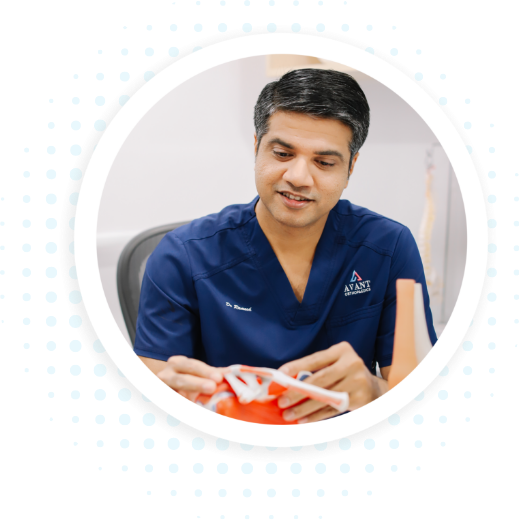
Dr Ramesh, a fellowship-trained orthopaedic surgeon, focuses on shoulder, knee, and arthroscopic sports surgery.
Dr Ramesh obtained his MBBS and Master’s in Orthopaedic Surgery from the National University of Singapore and completed Advanced Surgical Training. He earned his Fellowship from the Royal College of Surgeons of Edinburgh in Trauma and Orthopaedics. He was awarded the HMDP scholarship for a clinical fellowship in Shoulder and Knee Surgery in Dublin, followed by the Tan Tock Seng Scholarship for a Sports Fellowship in Knee Surgery in Barcelona. He also completed a Shoulder Surgery Fellowship at Hospital Del Mar and was trained in arthroscopic joint reconstruction and joint replacement surgeries.
Frequently Asked Questions
If you did not receive a meniscus transplant, you may be at risk of developing arthritis later in life. Since the meniscus acts as a shock absorber to prevent damage to your bones, its removal does mean more wear and tear on your joint over time. Because of this, total meniscectomies are generally not recommended unless it is necessary.
Some parts of your meniscus can receive sufficient blood flow that promotes faster healing, but that only accounts for 25 per cent of the meniscus. This peripheral part of the meniscus with good blood supply is termed the “red zone”. Repair procedures in this “red zones” will lead to better recovery outcomes since the blood flow helps speed up healing.
The remaining 75 per cent (the “white zone”) does not receive any blood flow. Surgical repair methods for damage to this white zone are less likely to succeed, and meniscectomy will be the recommended course of action.
Yes, as long as you do not over-exert the meniscus. You can try mini squats, straight leg raises, and hamstring curls from home, but if you feel any pain while exercising, stop immediately and seek medical attention.
Related Conditions

Knee cartilage (also known as articular cartilage) is a strong, rubbery connective tissue that cushions and protects the bones of the knee joints. It also reduces friction by allowing the bones to slide smoothly against each other.

Find Us Here
Novena
9 AM to 1 PM (Saturday)
Closed on Sundays and Public Holidays
Parkway
9 AM to 1 PM (Saturday)
Closed on Sundays and Public Holidays

