
Rotator Cuff Tears Treatment in Singapore
Book An Appointment
Key Takeaways
- Rotator cuff tears affect the muscles and tendons surrounding your shoulder joint due to an injury or gradual deterioration.
- Rotator cuff tears can be managed through non-surgical methods, but if the pain and other symptoms do not subside after some time, surgery is necessary.
- Preventing rotator cuff tears requires you to be careful when moving your arms and shoulders, lifting objects, and prioritising regular strengthening exercises.
What is a Rotator Cuff Tear?

The rotator cuff consists of several muscles and tendons surrounding the shoulder joint. It helps to stabilise the joint, allowing you to move your arms and lift objects. A tear in the rotator cuff can happen at any age, typically occurring when the tendon pulls away from your arm bone due to overuse or gradual wear and tear.
A rotator cuff tear may either be:
- Partial: A small tear forms on the rotator cuff, but your tendons are still attached to the shoulder joint.
- Complete: The tendon is completely separated from the shoulder bones. However, it is possible for only a small part of the tendon to be torn from the bone; this is known as a full-thickness partial width tear.
What Does a Rotator Cuff Tear Feel Like?
In most cases, a rotator cuff tear causes a dull, throbbing pain in your shoulder. You may feel the pain intensify when you try to do certain things, such as combing your hair and scratching your back. You may also hear popping, crackling, or clicking sounds whenever you move your arm into certain positions.
You might also experience:
- Difficulty sleeping when you lie on the side of the rotator cuff tear.
- Arm and muscle weakness, making it difficult to lift objects.
There have been people with a rotator cuff tear who report not feeling any pain in their shoulder but may still experience the other symptoms, including arm weakness.
What Causes a Rotator Cuff Tear?

A rotator cuff tear generally starts with an injury or gradual wear and tear. Excessive strain on your tendons can cause them to tear, especially if you fall with an outstretched hand or try lifting a heavy object with a sudden, jerking motion. A tear can also happen if you sustain another injury that causes a tear in your rotator cuff.
In most cases, however, gradual degeneration of the rotator cuff is the main culprit for the formation of tears. Repetitive arm motions are a common cause, mainly when you perform many arm movements for work or sports every day (think of baseball and weightlifting). These actions stress the rotator cuff’s muscles and tendons and gradually cause degenerative damage over time.
As most rotator cuff tears begin from normal wear and tear as we age, people over 40 are at greater risk of a tear. Suppose you have had a degenerative tear in one shoulder. In that case, you are also at risk of developing a rotator cuff tear in the other shoulder, even if it is still in relatively good shape.
Other causes of a rotator cuff tear include:
- Lack of blood flow: As we age, blood flow to the rotator cuff gradually reduces. A reduced blood supply can significantly impair the healing of a rotator cuff tear, especially for older persons.
- Bone spurs: Small bone growths can form on your shoulder bone and rub against the rotator cuff’s muscles and tendons when you move your arm. Over time, this can tear the rotator cuff.
There may be other risk factors that can determine if you are at risk of a rotator cuff tear:
- Family history of degenerative muscles, joints, or rotator cuffs
- Frequent smoking
- Poor posture
How is a Rotator Cuff Tear Diagnosed?
Diagnosing with a Physical Examination
Your doctor will start with a physical examination to look for signs of a rotator cuff tear. Part of the process involves them looking for signs of pain, tenderness, or muscle atrophy. They will also move your arm in several directions to assess its range of motion and arm strength; if you experience any pain during this process, tell your doctor immediately.
Using Jobe’s Test
Also known as the empty can test, the doctor will raise your arm until it is at a 90-degree position while you are standing or seated. They will move it slightly to the side so that it points diagonally from your position before gently rotating the arm until your thumb is facing downwards, as though you were emptying a can of soda.
The doctor will then place one hand on your arm and the other to support your shoulder, and you will be asked to raise your arm against the resistance of the doctor’s hand. Your doctor may repeat this step a few times.
If you experience any pain during this test, or if testing the other arm shows that the first arm tested shows apparent signs of weakness, that will confirm the presence of a rotator cuff tear.
Using the Full Can Test
A variation of Jobe’s test, you will again need to raise your arm 90 degrees from a standing or seating position while bent to the left or right at a 30-degree angle. From there, you will rotate your arm so that your thumb faces upwards instead of downwards. The doctor will then support your shoulder while applying downward force on your arm; you will be asked to resist this pushing motion. Your doctor may repeat this step a few times.
If you experience any pain during this test, or if testing the other arm shows that the first arm tested shows apparent signs of weakness, that will confirm the presence of a rotator cuff tear.
Diagnosing with Imaging Tests
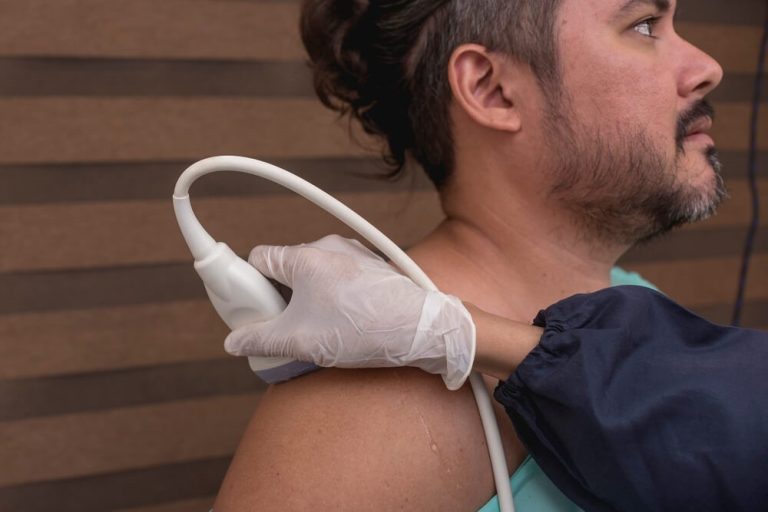
Your doctor may order additional tests if the physical exam does not give a satisfactory result. They may run a few imaging tests to help accurately differentiate your condition from others with similar symptoms.
- X-ray scan: While it cannot capture soft tissues, an X-ray can help identify bone spur formations and rule out the possibility of other conditions.
- Magnetic resonance imaging (MRI): This scan can reveal the size and position of rotator cuff tears and may also indicate whether the tear is old or new based on the extent of damage.
How to Treat a Rotator Cuff Tear
Treating Rotator Cuff Tears Without Surgery
Treating Rotator Cuff Tears with Physiotherapy
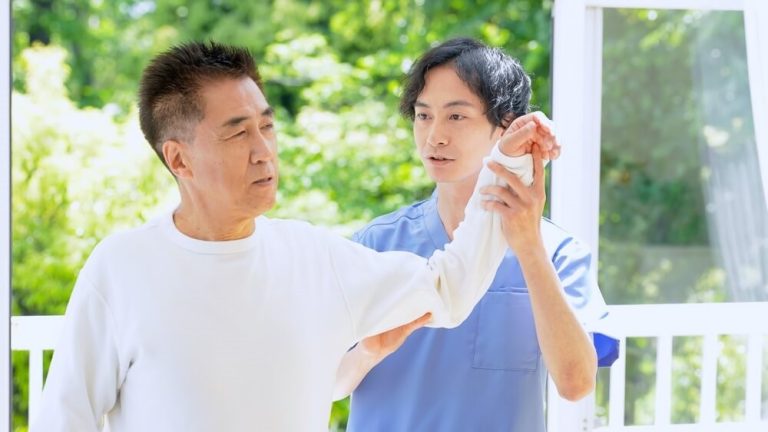
Physiotherapy can help you reduce pain and swelling, strengthen muscles, and slowly restore your range of motion and flexibility. Your physiotherapist will show you various exercise methods to help with this. Most activities will involve strengthening the shoulder and arm without putting too much strain on your rotator cuff. Several physiotherapy sessions can help to alleviate your symptoms and restore your neck’s mobility.
- Pendulum swings: Lean forward and let your good arms support your body. Let your injured arm hang loosely and then slowly swing it back and forth, or side to side, as though your arm is a pendulum.
- Arm lifts: Lie down with a towel close to you to rest your injured arm. Try to lift your arm straight up towards the ceiling. If you cannot do so, it is nothing to worry about. Proceed by using your good arm to raise your injured arm. Keep the arm up and the elbow straight for as long as you can without supporting it, then slowly bring your arm down with support. Repeat this a few times, but ensure that you stay within the bounds of yourself.
- Shoulder flexes: From the initial arm lift exercise, if you can raise your arm straight up without support, you can slowly raise your arm towards the ceiling and then move it forward and backwards at a gentle pace. As your arm gets stronger, you can increase the size of your swings at a reasonable pace. Repeat this for 5 minutes or until your arm is tired.
Treating Rotator Cuff Tears with Medication
Medications can provide much-needed pain relief, especially if you experience pain that affects your sleep quality. Non-steroidal anti-inflammatory drugs (NSAIDs) like aspirin are typically prescribed, though you may also be given steroid injections if needed. The injection comprises a local anaesthetic combined with cortisone, an anti-inflammatory medicine.
Treating Rotator Cuff Tears with Activity Modification
While rotator cuff tears do not heal on their own, proper management can still help you reduce pain and other complications without interrupting your daily routines. On top of frequent strengthening exercises, changing your lifestyle can also lead to positive outcomes. You may need to avoid using your injured arm very often to prevent any worsening of the rotator cuff tear. Plenty of rest is also ideal to help with recovery.
Treating Rotator Cuff Tears With Surgery
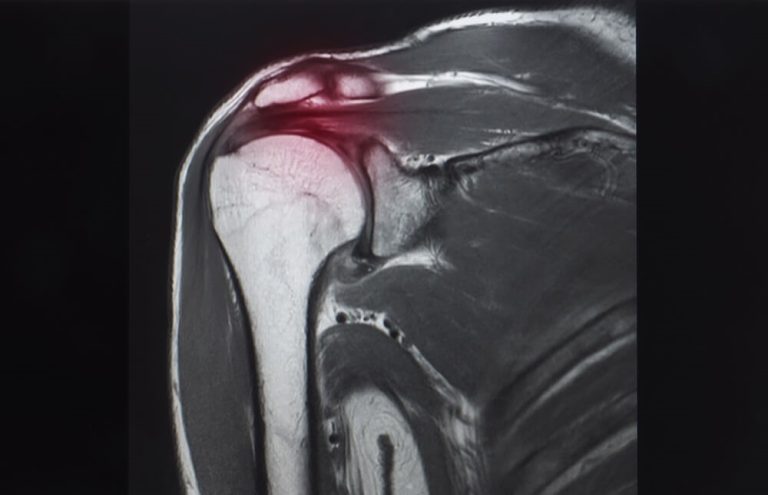
If you are still experiencing pain and arm weakness even with non-surgical treatment methods, you will need to consider surgery to prevent your rotator cuff tear from worsening further.
Treating Rotator Cuff Tears with Arthroscopic Surgery
For less severe tears, minimally invasive arthroscopic surgery is the ideal option. The surgeon will make a few small incisions around your shoulder area and insert an arthroscope with a camera. The arthroscope projects the camera feed to a monitor, allowing the surgeon to guide surgical tools into the shoulder area. The surgeon uses these special tools to carefully reattach the tendon and remove bone spurs. As for partial tears, the surgeon will trim fraying pieces of your tendon.
Treating Rotator Cuff Tears with Open Surgery
A traditional open surgery will be the best action for more complex tears. The surgeon will make an incision in your shoulder and must carefully move your shoulder muscles aside to access the rotator cuff area. The surgeon also looks for bone spurs that must be trimmed during the procedure to prevent further damage to the rotator cuff.
Treating Rotator Cuff Tears with Tendon Transfer
If the tendon is badly damaged and cannot be repaired surgically, the surgeon may perform a tendon transfer instead. The surgeon will surgically remove a part of a tendon from a different location to repair the tendon at the rotator cuff. Currently, the tendon of choice for this procedure comes from your back, the latissimus dorsi tendon.
One end of your latissimus dorsi tendon will be detached and carefully pulled under your shoulder muscle – in this case, the deltoid. That end of the latissimus dorsi tendon will be sutured to the remaining part of the rotator cuff tendon and the shoulder bone. If necessary, the surgeon will anchor the new tendon to the rotator cuff to keep the sutures in place.
Treating Rotator Cuff Tears with Reverse Shoulder Replacement
When you have a very severe rotator cuff injury that is irreparable by conventional means, you may be recommended reverse shoulder replacement surgery. The procedure involves making an incision on the front of your arm, then carefully moving muscle and tendons aside (some cuts may be necessary) to reach the shoulder joint.
From there, the upper arm bone is carefully removed from the socket, while the top of your arm bone is cut off to install an artificial socket. At where the socket is located, a plate is screwed into place, followed by a metallic hemisphere secured to the plate. Meanwhile, the surgeon inserts a metal stem into your arm bone before attaching a plastic socket at the top. The socket is connected to the ball, allowing the joint to move again. The surrounding tissue is sewn back together before the wound is closed up.
How to Prevent Rotator Cuff Tears
Regular exercise is the best preventive method for strengthening your muscles and tendons. Even if you may not be at high risk for a rotator cuff tear, you can speak to a physiotherapist about their recommended exercises to help you with long-term prevention. You should also take note of these other beneficial tips to help you prevent an injury.
- Maintain your balance during any physical activity, as falls put you at high risk of a tear.
- Avoid sudden jerking motions when moving your arms or shoulders.
- Maintain proper posture when lifting heavy objects.
- Have a balanced diet to keep up your well-being.
- Avoid smoking or alcohol consumption.
Receive Prompt Orthopaedic Treatments with Avant Orthopaedics
Rotator cuff tears are a concerning issue that requires prompt treatment. Still, you can rest assured that Avant Orthopaedics is here to help you out. Contact us to book an appointment and receive personalised care, where we will diagnose your condition and recommend the best course of action.
Rotator Cuff Tear Specialist in Singapore
Dr. Ramesh Subramaniam
MBBS (NUS, SG) | MRCS (Edinburgh, UK) | M Med (Ortho) (NUS, SG) | FRCS (Ortho) (Edinburgh, UK)
Dr Ramesh, a fellowship-trained orthopaedic surgeon, focuses on shoulder, knee, and arthroscopic sports surgery.
Dr Ramesh obtained his MBBS and Master’s in Orthopaedic Surgery from the National University of Singapore and completed Advanced Surgical Training. He earned his Fellowship from the Royal College of Surgeons of Edinburgh in Trauma and Orthopaedics. He was awarded the HMDP scholarship for a clinical fellowship in Shoulder and Knee Surgery in Dublin, followed by the Tan Tock Seng Scholarship for a Sports Fellowship in Knee Surgery in Barcelona. He also completed a Shoulder Surgery Fellowship at Hospital Del Mar and was trained in arthroscopic joint reconstruction and joint replacement surgeries.
Frequently Asked Questions
Tendonitis refers to an irritation or inflammation of your muscles. It can exhibit symptoms similar to a rotator cuff tear, including weakness and pain when moving the affected arm. The best way to differentiate the two is to seek medical attention immediately so an imaging test can accurately answer your condition.
Repeated use of the injured arm can put you at risk of a more extensive tear. That is why we recommend resting the arm and slowly but steadily strengthening its muscles.
Recovery can take between 4 to 6 months, but recovery times can vary from person to person. It is essential that you heed your doctor’s advice on how to manage pain and slowly restore the arm’s range of motion and flexibility.
Related Conditions
Biceps tendonitis is the inflammation of the upper part of the biceps, typically caused by overuse or injury to the biceps tendon. This tendon is a strong connective structure that connects the biceps muscle to the shoulder socket; while strong, overuse or injury can still cause gradual wear and tear, leading to inflammation and other complications.

A dislocated shoulder, medically known as glenohumeral joint dislocation, happens when the shoulder bone pops out of its socket and becomes misaligned. Being the most mobile joint in the body, the shoulder is at risk of dislocations, representing 50% of all major joint dislocations.
Find Us Here
Novena
9 AM to 1 PM (Saturday)
Closed on Sundays and Public Holidays
Parkway
9 AM to 1 PM (Saturday)
Closed on Sundays and Public Holidays

