
Elbow Dislocation Treatment in Singapore
Book An Appointment
What is Elbow Dislocation?
What is a Dislocation?
Before we dive into the subject of elbow dislocation, let’s get to understand what a dislocation is. A joint is an articulation between 2 bones. A dislocation is an injury to a joint, when the 2 bones lose 100% of their articulation or congruence. A subluxation is a partial dislocation with partial loss of congruity. Joints are connected by soft tissues such as ligaments and joint capsules. Ligaments are tough bands of tissues that connect bones to stabilize the joint, while joint capsules are thin, sac-like structures that surround joints.
In the event of a dislocation, the two bones become separated, which is usually caused by a significant force. This not only pushes the bones out of place but may also cause damage to the surrounding soft tissues, including tearing of ligaments, and tendons, or in severe cases, even affect the nerves and blood vessels.

What are the Different Types of Elbow Dislocation?
An elbow is dislocated when the humerus, ulna, and radius are knocked or pushed out of place. This is an incredibly painful injury which can make moving the elbow difficult. This injury can be divided into simple and complex based on the damage to your joint and surrounding tissue:
In a simple dislocation, the radius and ulna become separated from the humerus at the elbow joint. This separation could result in injuries to the ligaments that support your elbow, but there are no fractures present in the bones themselves.
On the other hand, a complex dislocation involves the fracture of either the humerus, radius, ulna or all of them combined. It could also result in severe injuries to your ligaments and tendons.
Your doctor may also classify the dislocation based on the extent of how far your bones were moved:
Also known as luxation, a complete dislocation happens when the joint surfaces are separated with the bones pushed out of place, with total loss of congruity.
Partial dislocations may be referred to as subluxation. It is used to describe joint surfaces that are pulled apart but the bones are still touching partially.
What are the Symptoms of Elbow Dislocation?
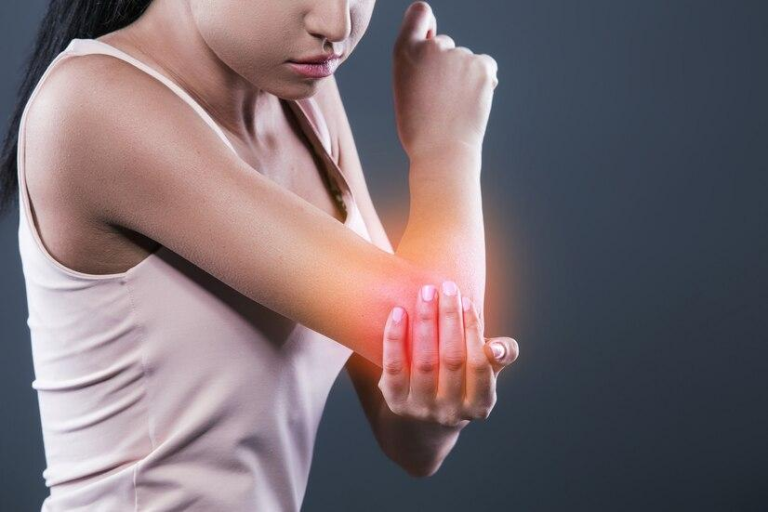
A dislocated elbow can be painful, whether it is partial or complete. This can make it difficult for you to stretch your arm, lift objects, or perform simple actions such as raising your hand.
Following an elbow dislocation, the soft tissues around the elbow joint may become inflamed which can lead to swelling. There may also be blood vessels that might be damaged during the dislocation, resulting in bruising around the elbow.
Due to injury, swelling, pain, and stiffness, you may experience a limited area of mobility for your elbow joint. The extent of this limitation depends on the severity of the dislocation.
In some cases, a dislocated elbow can cause a visible deformity in the joint. The elbow may appear out of place or misaligned compared to the unaffected arm.
If the dislocation causes damage to the nerves around the elbow, it can lead to numbness or tingling sensations in the arm or hand. This symptom is less common but may occur in severe cases.
What are the Common Causes of Elbow Dislocation?
A common cause of elbow dislocation is trauma, which is usually caused by a vehicle collision, or a direct blow to the elbow. It can result in a forceful displacement of the bones that form the elbow joint, leading to a dislocation.
Players of close contact sports such as rugby and football are at a higher risk of developing elbow dislocation. This is because players are often involved in physical contact or collisions that can result in significant force being applied to the elbow.
Falling from heights or onto your outstretched hand can lead to elbow dislocation. The severity, however, can vary depending on the angle of impact, and the position of the arm during the incident.
How is Elbow Dislocation Diagnosed?
Your doctor will examine the affected elbow and inspect for signs of swelling, bruising, or deformities. You may also be asked about any past injuries, and your medical history, and describe the events leading up to the injury.
X-rays are commonly used to diagnose elbow dislocations as they can provide detailed images of the position of the bones in your elbow joint. This can help your doctor determine if there are any fractures present, as well as, their severity.
This is an imaging technique that uses electromagnetic waves to produce detailed images of muscles, tendons, ligaments, and soft tissues in the body. It can be used to diagnose and evaluate the extent of elbow dislocations along with aid in treatment planning.
CT scan is a diagnostic technique usually done before surgery takes place to assess fractures that occur within a joint. It can be helpful for your doctor when it comes to planning the surgical approach and understanding the extent of the fracture.
Treatments for Elbow Dislocation
What are the Non-Surgical Treatments for Elbow Dislocation?
You may be advised to avoid putting pressure on or straining the affected elbow. This can include staying away from activities that may require lifting heavy objects or participating in strenuous exercise. By allowing your elbow sufficient time to rest, it can help ensure proper healing and recovery.
Elbow dislocation can be accompanied by pain and inflammation. To alleviate discomfort as you progress through treatments, your doctor may prescribe medication such as NSAIDs to manage these symptoms. However, it is important to keep in mind that you should avoid self-medicating and take medication following your doctor’s advice.
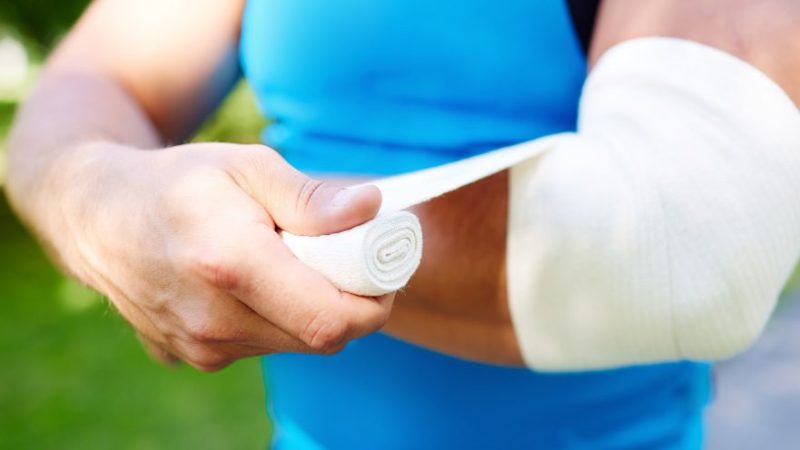
This can be done by wearing a splint, brace, or cast to prevent the affected elbow from moving too much, after the elbow has been reduced back into position. Immobilization can help in the recovery process by allowing the injured ligaments to heal without being disrupted by excessive movement.
If you are suffering from a dislocated elbow, you may want to avoid moving your affected elbow unnecessarily. However, once your doctor has given you the green light, you may want to speak with a physiotherapist to have a personalised exercise plan designed to aid in restoring mobility, strength, and flexibility to your elbow.
What are the Surgical Treatments for Elbow Dislocation?
ORIF is a procedure used to treat severe elbow dislocations and fractures. During an open reduction, the surgeon makes an incision to access the dislocated joint and any fractures that are present. The bones are then manipulated into the right position and held together with internal fixation devices such as plates, screws, or rods to stabilise the joint.
Elbow dislocation and fractures can result in severe damage to the ligaments that stabilise the elbow joint. Elbow ligament reconstruction is a surgical procedure used to reconstruct or repair damaged ligaments in the affected joint. The surgeon may use a graft, taken from your body or a donor, to reconstruct the damaged ligament. It will then be secured in place through sutures or anchors.
Elbow replacement, also known as elbow arthroplasty, involves surgically replacing bones that make up the elbow joint with parts made of metal and plastic. This procedure may be partial or total, depending on the extent of the damage to the joint. In a partial joint replacement, only one part of the joint is replaced, while in a total elbow replacement, both the humerus and ulna are replaced.
How Can You Prevent a Dislocated Elbow?
Pain, soreness, and bruising are common signs we may experience when engaging in physical activities. However, some may brush them off and continue with their activities without much thought. They are signals from your body to take a break, or there may be a risk of injuries such as a dislocated elbow. If these symptoms persist even after a period of rest, it is recommended to seek medical attention.
The act of warming up before an activity helps increase blood flow to your muscles and makes them more flexible and less prone to injuries. The act of warming up can include light aerobic exercises, as well as, dynamic stretches that target the joints and muscles you will be using.
During contact sports or activities that involve impact, the usage of proper protective equipment is crucial to reducing the risk of a dislocated elbow. It's important to ensure that the protective equipment fits properly and is in good condition. Replace any equipment that is worn out or damaged to ensure maximum protection.
Avoid situations that can put you at a risk of falls such as walking along a slippery path, dark spaces, or uneven surfaces. You can also take precautions to protect yourself such as wearing proper footwear to prevent slipping and using handrails when going up or down stairs.
Elbow Dislocation Specialist in Singapore
Dr. Ramesh Subramaniam
MBBS (NUS, SG) | MRCS (Edinburgh, UK) | M Med (Ortho) (NUS, SG) | FRCS (Ortho) (Edinburgh, UK)
Dr Ramesh, a fellowship-trained orthopaedic surgeon, focuses on shoulder, knee, and arthroscopic sports surgery.
Dr Ramesh obtained his MBBS and Master’s in Orthopaedic Surgery from the National University of Singapore and completed Advanced Surgical Training. He earned his Fellowship from the Royal College of Surgeons of Edinburgh in Trauma and Orthopaedics. He was awarded the HMDP scholarship for a clinical fellowship in Shoulder and Knee Surgery in Dublin, followed by the Tan Tock Seng Scholarship for a Sports Fellowship in Knee Surgery in Barcelona. He also completed a Shoulder Surgery Fellowship at Hospital Del Mar and was trained in arthroscopic joint reconstruction and joint replacement surgeries.
Are you or a Loved One Suffering from Spinal Tumors?
An elbow dislocation can lead to pain, swelling, and limited mobility in the affected area. If you or a loved one are experiencing these symptoms after an injury or a fall, contact us at Avant Orthopaedics to receive a personalised consultation and learn about available treatments.
Related Conditions
Tennis elbow also referred to as lateral epicondylitis, is caused by the overuse of muscles which connect your forearm to your elbow. It is also a degenerative condition characterised by inflammation, microscopic tears, and pain in the affected area.

Golfer’s elbow, also known as medial epicondylitis, is a condition that causes pain and discomfort on the inside of your elbow.
Find Us Here
Novena
9 AM to 1 PM (Saturday)
Closed on Sundays and Public Holidays
Parkway
9 AM to 1 PM (Saturday)
Closed on Sundays and Public Holidays

