
Total/Partial Hip Replacement Surgery
Book An Appointment
Key Takeaway
- Total/partial hip replacement is a surgical procedure involving partially or entirely replacing a damaged hip joint with artificial implants.
- Total/partial hip replacement is ideal for cases where arthritis or significant injury to the hip has caused substantial damage that cannot be treated via nonsurgical methods.
- Partial hip replacement is primarily performed if only the hip joint's ball (or socket) component requires surgical treatment.
- Recovery after a total or partial hip replacement may take a few weeks to several months. You will also need to take care of your hip implants to help maintain their condition over time.

What is Total/Partial Hip Replacement Surgery?
Total Hip Replacement or Partial Hip Replacement (hip hemiarthroplasty) is an extensive surgical procedure that replaces a part or the entire hip with artificial implants. It is a corrective procedure that helps address mobility issues caused by hip damage or degeneration.
The hip is the single largest ball-and-socket joint in the body. It comprises the acetabulum, the socket on the pelvic bone, and the femoral head that connects to your femur (the thighbone). The femoral head fits into the acetabulum, allowing your leg to rotate and move forward, backwards, and sideways.
The surfaces of the ball and socket are covered with smooth articular cartilage that cushions the ends of the bones and allows for smooth movement, while ligaments (hip capsule) connect the ball to the socket and help stabilise the joint. A thin synovial membrane also surrounds the hip joint, lubricating the cartilage and removing almost all friction when the hip moves.
Why is Total/Partial Hip Replacement Surgery Needed?
When your hip suffers an injury, it can affect joint function and cause various complications such as pain during movement or when resting, stiffness and inflammation. If nonsurgical treatments do not sufficiently relieve your symptoms, a total hip replacement may be considered to help support your recovery and well-being.
A partial hip replacement (or hemiarthroplasty) may be considered in rarer cases where only the femoral head is injured or if you have had a hip fracture. However, this may depend on several factors, including your age, general health, and more.
The most common reason for total/partial hip replacement is to treat hip-related arthritis or an injury that affects the hip.
Hip Fracture
A severe injury, such as one caused by a fall, sports activity or motor vehicle accident, can result in a hip fracture. This can lead to severe hip pain, bruising, swelling, and a reduction in mobility. Depending on the severity of the fracture, you may require a total or partial hip replacement to address the damage effectively.
Osteoarthritis
This is a degenerative joint disease that generally affects those aged 50 and above. The cartilage that cushions the hip bones wears down over time, causing the bones to rub against each other, which can lead to pain and gradual stiffness. While osteoarthritis cannot be completely prevented, you can take preventive measures to slow its progression. Those with osteoarthritis can also opt for a total/partial hip replacement to improve their condition.
Rheumatoid Arthritis
Rheumatoid arthritis is a type of inflammatory arthritis where the synovial membrane becomes inflamed and thickened, gradually wearing down the cartilage and causing hip pain, discomfort, and stiffness. When appropriate, total hip replacement may be recommended to help manage symptoms and improve mobility.
Posttraumatic Arthritis
This condition is inflammation that develops in the hip after a severe injury. While degenerative conditions like arthritis develop over time, traumatic injuries can exacerbate the wear and tear in the hip, leading to posttraumatic arthritis developing more quickly. Symptoms of posttraumatic arthritis may include significant pain, stiffness, and limited mobility
Hip Dysplasia
Hip dysplasia is a condition that can affect babies and children (and sometimes adults), which occurs when the ball of the hip joint does not fit properly into the socket. When this happens, it can damage the cartilage and lead to symptoms such as pain and stiffness. It may also increase the risk of hip dislocations, further complicating recovery. If hip dysplasia arises from joint damage, a total or partial hip replacement may be ideal to address the issue.
Femoroacetabular Impingement Syndrome (FAI)
Also known as hip impingement, this condition occurs when the bones of the hip joint do not fit together smoothly and rub against each other, causing hip pain, limping, and stiffness. If left untreated, the impingement can also damage the cartilage cushioning the hip joint.
Osteonecrosis
A hip injury can damage nearby blood vessels, reducing blood supply to the femoral head. This may lead to gradual weakening and collapse of the bone’s surface, potentially causing or worsening arthritis in the hip joint. A total hip replacement may be considered to replace the damaged hip joint, and additional surgical procedures may be performed to help repair the damaged blood vessels to restore blood supply to the area.
Suitability for Total/Partial Hip Replacement
- Hip pain limits your daily activities, including walking inside your house.
- Hip pain that appears infrequently during the day or even at night.
- Hip stiffness that significantly impedes your mobility and can come and go at random.
- Minimal effectiveness with pain relief using nonsurgical treatments, including physical therapy.
Your suitability is generally determined by the severity of your symptoms rather than your age. In fact, a total hip replacement may help restore your hip’s range of motion and flexibility to levels experienced before the injury.
A partial hip replacement may be considered in less severe cases where only the femoral head needs to be replaced with an artificial implant to help restore hip function. It also requires less surgical time, potentially meaning a slightly shorter downtime to recover post-surgery. Depending on your condition after the surgery, a short observation period may still be required.
Preparations for Total/Partial Hip Replacement
During the initial consultation, your doctor may recommend medical tests to assess your hip’s condition and determine whether a total or partial hip replacement is suitable for you. They may also ask a few questions regarding your current health, the location of your hip pain, and other relevant questions. A physical examination may also be performed to assess your hip’s range of motion, stability, flexibility, and strength, and compare it with your other hip.
Imaging tests (such as X-ray scans) may also be necessary to look for possible signs of arthritis, fractures, bony fragments or overgrowth, or damaged cartilage. If your doctor determines that additional evaluations (including blood tests) are necessary to confirm the diagnosis, they may also be performed.
Your medical team will guide you through the treatment plan and the general dos and don’ts in preparation for surgery. You are encouraged to ask your doctor any questions you may have about your condition, potential risks and how to prepare for the surgery.
Before Total/Partial Hip Replacement Surgery
It is also advisable to speak with your doctor during the consultation about what to expect from the surgery. For example, you can ask whether there are medications you need to stop taking before surgery, or if there are specific items you should bring with you. You may refer to this checklist to help you prepare for the procedure.
- Current health: If you have a chronic condition, you will need to be evaluated thoroughly to determine if you are eligible for a total/partial hip replacement.
- Possible risks: Your doctor will explain the potential risks of the surgical procedure and what to expect during and after it. They will also advise you on the dos and don’ts to help reduce these risks.
- Health evaluations: Ideally, you should undergo dental or urinary evaluations before your total/partial hip replacement surgery as a safety precaution to minimise the risk of infection or other complications.
- Post-surgery assistance: You should have someone accompany you during the early stages of recovery to assist with daily tasks at home or when going out.
- Home modification: Making changes around your home can help create a safer environment for moving around independently. This may include removing loose rugs, cables, and other potential fall hazards or installing handrails at key locations to support you as you move around.
On the day of the surgery, you will undergo a final health assessment, which may include a discussion about your anaesthesia needs. After that, you will change into a surgical gown and wait for the procedure to begin. Your surgeon may also mark your hip to verify the surgical site.
During Total/Partial Hip Replacement Surgery
Once you are anaesthetised, the surgeon will make an incision on either the front (anterior), back (posterior), or side (lateral) of your hip, depending on the location and severity of the injury. The posterior technique is the most commonly used technique and is often associated with shorter surgical times. On the other hand, the direct anterior approach typically results in slightly more rapid recovery outcomes, as it requires less muscle cutting to access the hip joint.
Regardless of the technique used, the surgeon will make an incision and carefully detach the surrounding muscles and tissues to dislocate the hip and access the joint. Any diseased or damaged bone and cartilage will be removed, while keeping the healthy bone intact. The surgeon will then position the implants and, depending on your bone’s overall quality and strength, they may either be “press-fitted” into the joint, allowing the bone to grow onto them or secured using surgical cement. In some cases, a combination of both methods may be used.
Once everything is in place, the surgeon will reattach the muscles to the hip, close the incision with stitches, and clean the surgical site. You will then be taken to the recovery room.
Minimally Invasive Total/Partial Hip Replacement Surgery
The surgery may also be performed using minimally invasive techniques, where the surgeon makes one or multiple small incisions in specific areas of your hip to access the joint and replace the damaged components. If necessary, the surgeon may use X-ray guidance during the procedure to facilitate the procedure. Specialised surgical instruments may also be used to enter these incisions and perform the necessary procedures to replace the hip joint.
While minimally invasive surgery is effective and has shorter recovery times compared to traditional hip replacement surgery, it is not suitable for everyone. The initial consultation and examination will determine if you are a suitable candidate for minimally invasive surgery. If you have had prior hip surgeries, hip joint deformities or a higher body mass index, you may not be suitable for this procedure.
After Total/Partial Hip Replacement Surgery
- Avoid using the affected hip and leg too much to prevent unwanted complications, including moving them into extreme positions.
- Your rehabilitation program starts when you are discharged, so attend scheduled physical therapy sessions (if applicable) regularly to ensure you can recover quickly.
- Engaged in regular light exercise at home to support your recovery and prevent muscle weakening. Be careful not to overexert yourself during these sessions.
- Stay in touch with your doctor so they can help address any issues that may arise during your recovery period.
- If you are prescribed medications to help with your recovery, take them at the prescribed times and dosage advised by your doctor. If you experience any sudden side effects, contact your doctor immediately and stop taking the medications until instructed otherwise.
- Avoid soaking your surgical wound in water until it has fully healed. You will also be taught how to care for the dressing, which you should replace regularly until the wound completely heals.
- Have someone who can assist you at home during your recovery period to maximise recovery outcomes.
- Attend follow-up sessions with your doctor (if applicable) so they can monitor your recovery’s progression.
As the implant may contain metal, it could trigger metal detectors at places like airports. If this happens, inform the relevant personnel of your hip replacement. It may take time to adjust to the new joint, but over time, it will begin to feel more natural.
Frequently Asked Questions
If nonsurgical treatments do not improve your hip condition, a total or partial hip replacement may be needed to help restore mobility, flexibility, and strength. It also provides pain relief if you have been experiencing pain and discomfort. While outcomes are generally very good, a total or partial hip replacement has a high chance of restoring your hip’s overall condition to normal levels and reducing the risk of further joint deterioration.
Depending on the nature of your hip joint injury, the total surgical time will generally take one to two hours.
Many hip implants can last more than 15 years, especially if you listen closely to your doctor’s advice and take additional steps to protect your hip implants.
Our Orthopaedic Doctor and Surgeon for Total/Partial Hip Replacement
Dr. McGraw
M.B.Ch.B. | M.R.C.S. (Lon) | F.R.C.S. (Tr & Orth)
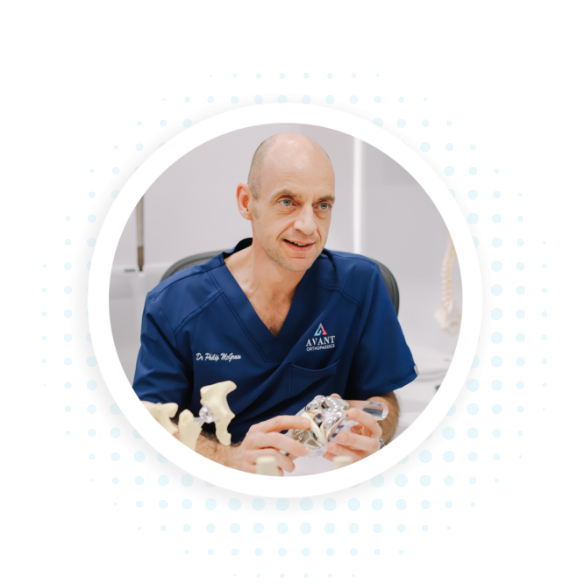
Dr. McGraw is a practising orthopaedic and trauma surgeon at Mount Elizabeth Novena Hospital and Parkway East Hospital.
His special interests and expertise include the management of all aspects of hip and knee conditions, in addition to general orthopaedic and trauma surgery.
Born and bred a Yorkshireman, Dr. McGraw studied Dental Surgery at Newcastle-Upon-Tyne in the United Kingdom. Upon qualifying, he worked as a Maxillofacial surgical trainee before undertaking his dental fellowship at The Royal College of Surgeons London and then commencing his studies in Medicine at Manchester University. He subsequently decided to change tack and completed his training as an Orthopaedic Surgeon in the northwest region of England. Dr. McGraw completed his training by undertaking two fellowships in hip and knee surgery at Wrightington Hospital in the UK. He was appointed as Consultant Orthopaedic Surgeon at Bury & North Manchester General Hospitals in 2012. Whilst at these hospitals, he kept up with the waiting list issues by dedicating his weekends to work in waiting list initiative lists at Wrightington Orthopaedic Hospital.
Related Treatments

Hip core decompression is a minimally invasive surgery used to treat avascular necrosis (AVN) by relieving pressure within the femoral head and improving blood flow to the bone. The procedure helps slow or stop bone collapse, reduce hip pain, and preserve joint function. It is recommended for early-stage AVN and may be combined with bone grafting or biologic therapies to enhance healing.

Early-onset osteonecrosis of the hip may be treated with nonsurgical methods, but it only manages symptoms and prevents the condition from rapidly worsening. Surgery is your best bet for treating osteonecrosis of the hip, with early-stage cases requiring minimally invasive procedures to help with your recovery.
Find Us Here
Novena
9 AM to 1 PM (Saturday)
Closed on Sundays and Public Holidays
Parkway
9 AM to 1 PM (Saturday)
Closed on Sundays and Public Holidays

