
Achilles Tendinitis Treatments: Symptoms and Causes
Book An Appointment
Key Takeaways
- Achilles tendinitis is an inflammation of the Achilles tendon, generally caused by over-using the Achilles tendon.
- While not life-threatening, you may still suffer from reduced mobility until you get medical attention.
- Most people will recover with sufficient rest, but surgery may be recommended if the pain persists for more than six months.
- Prevention is relatively easy by managing your physical activity to reduce excess strain on the Achilles tendon.
What is Achilles Tendinitis?
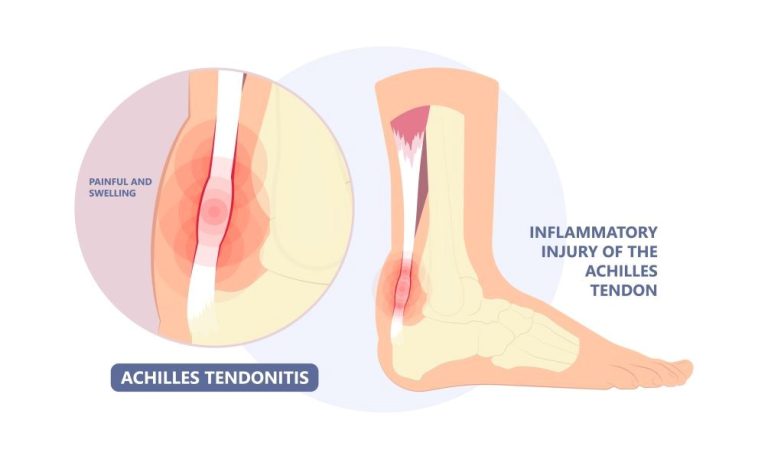
Achilles tendinitis is the inflammation of your Achilles tendon. The Achilles tendon connects your calf muscles (located in the lower back of your leg) to the heel bone. Its primary purpose is to enable you to walk, run, jump and stand on the balls of your feet. The Achilles tendon can withstand plenty of pressure. However, when you suddenly increase the intensity or duration of physical activities, the tendon is at high risk of inflammation. It can start as a light discomfort but quickly becomes painful if you do not take a break.
There are two types of Achilles tendinitis:
- Non-insertional Achilles tendinitis: It affects the fibres on the middle part of the tendon, just above where it is attached to the heel bone. Over time, these fibres can start to develop microscopic tears, leading to a swollen tendon. This type commonly affects younger people with active lifestyles.
- Insertional Achilles tendinitis: This type affects the lower part of the tendon that attaches to the heel bone. The damaged fibres can harden over time and gradually form a bone spur on the heel. Insertional Achilles tendinitis can affect anyone at any age, but active persons remain at high risk.
Achilles Tendinitis Symptoms
Symptoms may not immediately present themselves, but they may differ from person to person. Common symptoms are:
- Pain or stiffness along the tendon
- Pain or swelling that gets worse with any physical activity, even when you are walking slowly
- Tenderness along the tendon
- Severe pain after intense physical activity
- Limited range of motion when moving your feet
- Noticeable bone spur formation
- Weakness in the affected leg
What Causes Achilles Tendinitis?

The most common reason Achilles tendinitis happens is because a person over-exerts their Achilles tendon. This over-exertion most commonly occurs due to vigorous physical activity with few breaks in between to let the body recover. One example of this is steadily increasing your running distance each day without letting your body get used to the change.
Because of how often we require the use of the Achilles tendon to get around, it does get hard to allow it to recover on its own. The gradual wear and tear it goes through also inevitably contributes to Achilles tendinitis at a later point in life. Even people with less active lifestyles are at risk simply because their bodies cannot stand the stress of physical activity, no matter how minor.
There may be other risk factors for Achilles tendinitis, including your body’s physiology. For instance, tight calf muscles can exert additional stress on the Achilles tendon.
Can You Live With Achilles Tendinitis?
You can, but only if you give your Achilles tendon time to recover between physical activities. Doing so ensures that you reduce its overall wear and tear, making it possible to slow down the progression of Achilles tendinitis. It does not reduce your risk of Achilles tendinitis, but prevention is still the better option.
How is Achilles Tendinitis Diagnosed?
Physical Examination

Your doctor will start with a physical examination to look for signs of Achilles tendinitis. They may gently press on the area where the Achilles tendon is and identify any pain or discomfort you may experience. They may also assess your foot and ankle’s range of motion and reflexes, among other things.
Diagnostic Tests
Additional tests may be needed to confirm the diagnosis, especially if the physical exam cannot give a satisfactory result. These tests could point out other complications that may be contributing to what you are currently experiencing.
- X-ray scan: An X-ray can identify bone spur growths or calcification, a buildup of excess calcium, in the Achilles tendon.
- Magnetic resonance imaging (MRI): This scan can show the extent of damage to the Achilles tendon. The latter test can also inform doctors of the appropriate treatment method needed.
Achilles Tendinitis Treatments
Treating Achilles Tendinitis Without Surgery
Proper rest is essential to help your Achilles tendon to heal quickly. Make a point to reduce putting too much pressure on the tendon as much as possible.
Pain Relief
Most cases of Achilles tendinitis only require proper rest for it to heal. Medication prescriptions will help you with managing any pain you feel while you recover. Your doctor will prescribe a short course of non-steroidal anti-inflammatory drugs (NSAIDs) like ibuprofen for a few days. Be sure to comply with the doctor’s instructions.
First Aid
The RICE method can help you reduce symptoms and manage pain.
- Rest: Avoid activities that put pressure/stress on the affected knee. Let your Achilles tendon heal on its own.
- Ice: Place a cold compress or ice pack on the affected area for 15 to 20 minutes several times daily.
- Compression: Wrap the affected area with surgical tape or a compression wrap to reduce swelling.
- Elevation: Position your knee and leg above the level of your heart as often as possible. You can prop up your knee with pillows.
Physiotherapy
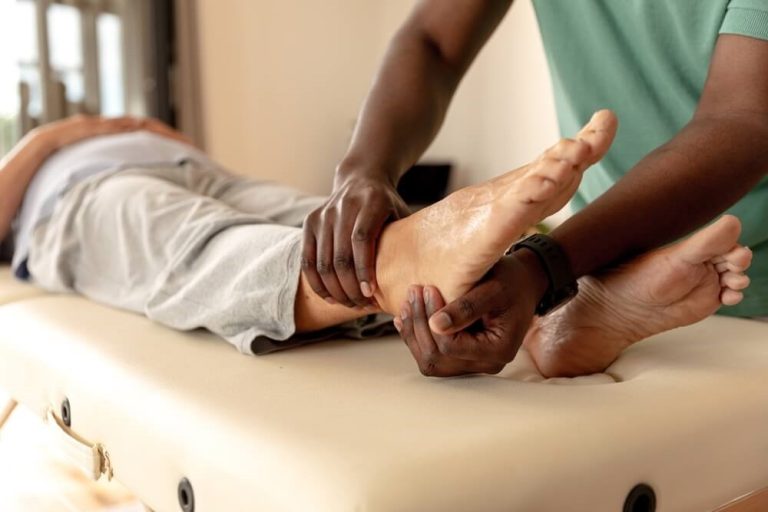
Physiotherapy can help you reduce pain and swelling, strengthen muscles, and slowly restore your range of motion and flexibility. Your physiotherapist will show you various exercise methods to help with this. Most activities will involve strengthening the calf muscles and reducing the pressure on the Achilles tendon.
- Calf stretch: This is an easy exercise you can do anywhere. First, lean towards a wall with one knee straight and the heel firmly on the ground. With the other leg, bring it forward and bend the knee. You can place both hands on the wall for support. Once in position, slowly push your hips towards the wall and stay in that position for 10 seconds. Repeat the process 20 times for each foot.
- Eccentric strengthening: This series of exercises involves contracting or tightening a muscle as it lengthens. When you first perform this exercise, your physiotherapist will monitor you closely to ensure you can do it properly. Eccentric strengthening can improve the strength of the Achilles tendon.
Several physiotherapy sessions can help to restore your Achilles tendon’s condition.
Night Splinting
This method uses removable braces that lock your foot in a calf stretch position while you sleep. The braces help reduce the pull of your Achilles tendon on the heel, thereby reducing wear and tear while you are resting.
Appropriate Shoe-wear and Orthotic Devices
The right shoes can make a big difference in maintaining the condition of your Achilles tendon. Shoes with softer heels can reduce irritation and pressure on the tendon. Meanwhile, shoe inserts can reduce the force exerted on the tendon while walking.
Surgery for Achilles Tendinitis
If you are still experiencing pain after six months of non-surgical treatment, you will inevitably need surgery. The choice of surgical method will depend on several factors.
Minimally Invasive Surgery
This method is optimal for treating minor injuries or Achilles tendon inflammation. A small incision will be made on your skin to allow special instruments, including a camera, to reach the Achilles tendon. The surgeon will carefully remove any damaged or inflamed tissue from the tendon.
The recovery period for a minimally invasive surgery is shorter than standard surgical methods.
Debridement
This method removes any unhealthy tissue surrounding the Achilles tendon. There are two forms of debridement:
- Debridement and repair: If your Achilles tendon is healthy, the surgeon will remove the damaged tissue on your tendon. The healthy tendon will be reattached to the heel bone with metal or plastic anchors to hold it in place. After the procedure, you must wear a walking boot or cast to help you recover.
- Debridement and tendon transfer: If more than 50 per cent of your Achilles tendon is unhealthy, the remaining part of your tendon cannot function properly. The surgeon will remove a portion of the tendon that allows your big toe to flex downwards and reattach it to the heel bone. Even after surgery, your big toe can still flex like normal.
Gastrocnemius Recession
This procedure surgically lengthens your calf muscles and is usually recommended for people with tight calf muscles. The procedure helps to reduce the stress on the Achilles tendon. At the same time, it significantly improves motion in your ankle and heel.
Can You Prevent Achilles Tendinitis?
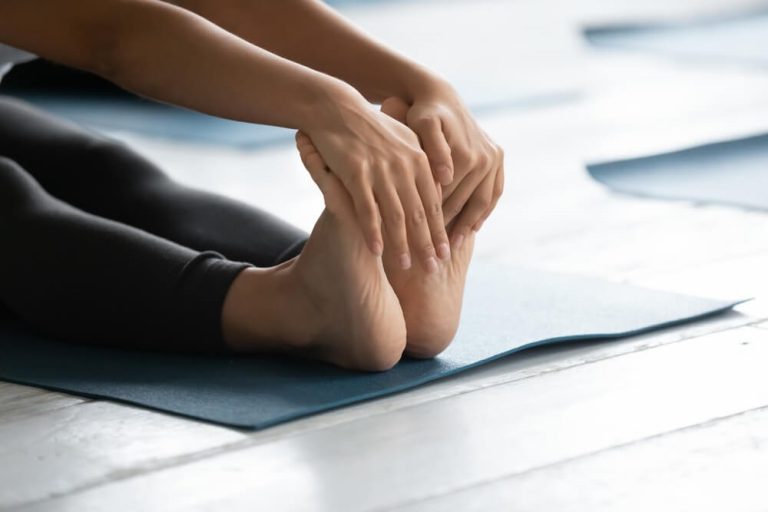
Yes, you can. Ideally, you want to take preventive measures so that Achilles tendinitis does not inhibit your mobility and independence. Some steps you can take include:
- Slowly increase your physical activity: Our bodies need time to get used to physical activity. If you are new to this, start with a warm-up session to prepare for the day’s exercises. Start slowly and then steadily build up the intensity. Make sure to pace yourself appropriately so you do not strain your body unnecessarily.
- Change your routine: Try doing a mixture of exercises so you do not put undue stress on your Achilles tendon. Varying your routines each day can also be pretty fun.
- Stretch often: Even if you are not exercising, frequently stretching your limbs can help to prevent Achilles tendinitis. You should stretch every time you wake up in the morning and before and after your exercise routine.
- Wear appropriate shoes: Avoid wearing shoes that are too tight for you. You should also ensure your shoes have adequate cushioning support so you do not put too much stress on your Achilles tendon.
- Cross-training: Have a balance of high-impact (running) and low-impact (swimming) exercises so you do not strain your Achilles tendon.
Getting Professional Medical Attention
Achilles tendinitis can be a concerning issue, but you can rest assured that Avant Orthopaedics can help you. Contact us to book an appointment and receive personalized care, where we will diagnose your condition and recommend the best course of action.
Orthopaedic Specialist for Achilles Tendinitis in Singapore
Dr. Ramesh Subramaniam
MBBS (NUS, SG) | MRCS (Edinburgh, UK) | M Med (Ortho) (NUS, SG) | FRCS (Ortho) (Edinburgh, UK)
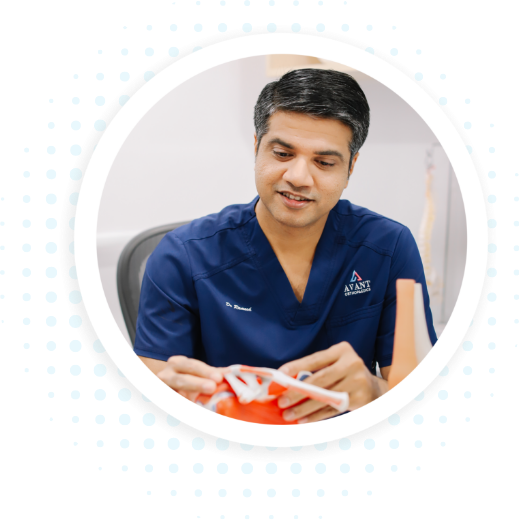
Dr Ramesh, a fellowship-trained orthopaedic surgeon, focuses on shoulder, knee, and arthroscopic sports surgery.
Dr Ramesh obtained his MBBS and Master’s in Orthopaedic Surgery from the National University of Singapore and completed Advanced Surgical Training. He earned his Fellowship from the Royal College of Surgeons of Edinburgh in Trauma and Orthopaedics. He was awarded the HMDP scholarship for a clinical fellowship in Shoulder and Knee Surgery in Dublin, followed by the Tan Tock Seng Scholarship for a Sports Fellowship in Knee Surgery in Barcelona. He also completed a Shoulder Surgery Fellowship at Hospital Del Mar and was trained in arthroscopic joint reconstruction and joint replacement surgeries.
Frequently Asked Questions
You can, but you will still experience some pain or discomfort in the process. We recommend you get plenty of rest and use the RICE technique to alleviate the pain. If the pain continues after a long time, get immediate medical assistance.
Achilles tendinosis is one common complication. When the tendon suffers chronic damage, it may cause the tendon to weaken. Over time, partial or complete ruptures to the tendon can happen. You might experience more pain and stiffness in the affected tendon than Achilles tendinitis.
It depends. Some people only need a few weeks to recover, while others could take several months. Keep up with your physiotherapy sessions and, if need be, talk to your doctor if you have concerns.
Related Conditions
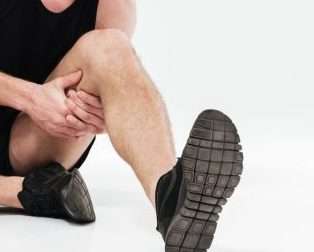
Foot and ankle pain can manifest in various ways, and the symptoms you experience can vary based on the underlying cause of the pain. Here are some common symptoms.
A common cause of heel pain, plantar fasciitis is the inflammation of the plantar fascia, which is the tough, fibrous tissue that extends across the heel of each foot and connects our heel bone to the base of our toes. The plantar fascia experiences much wear and tear in the day-to-day, as it is used when you walk or move your foot.
Stress fractures are characterised as overuse injuries, where tiny cracks form on bones due to repetitive force or caused by conditions such as osteoporosis, which can weaken bone health.
Find Us Here
Novena
9 AM to 1 PM (Saturday)
Closed on Sundays and Public Holidays
Parkway
9 AM to 1 PM (Saturday)
Closed on Sundays and Public Holidays

